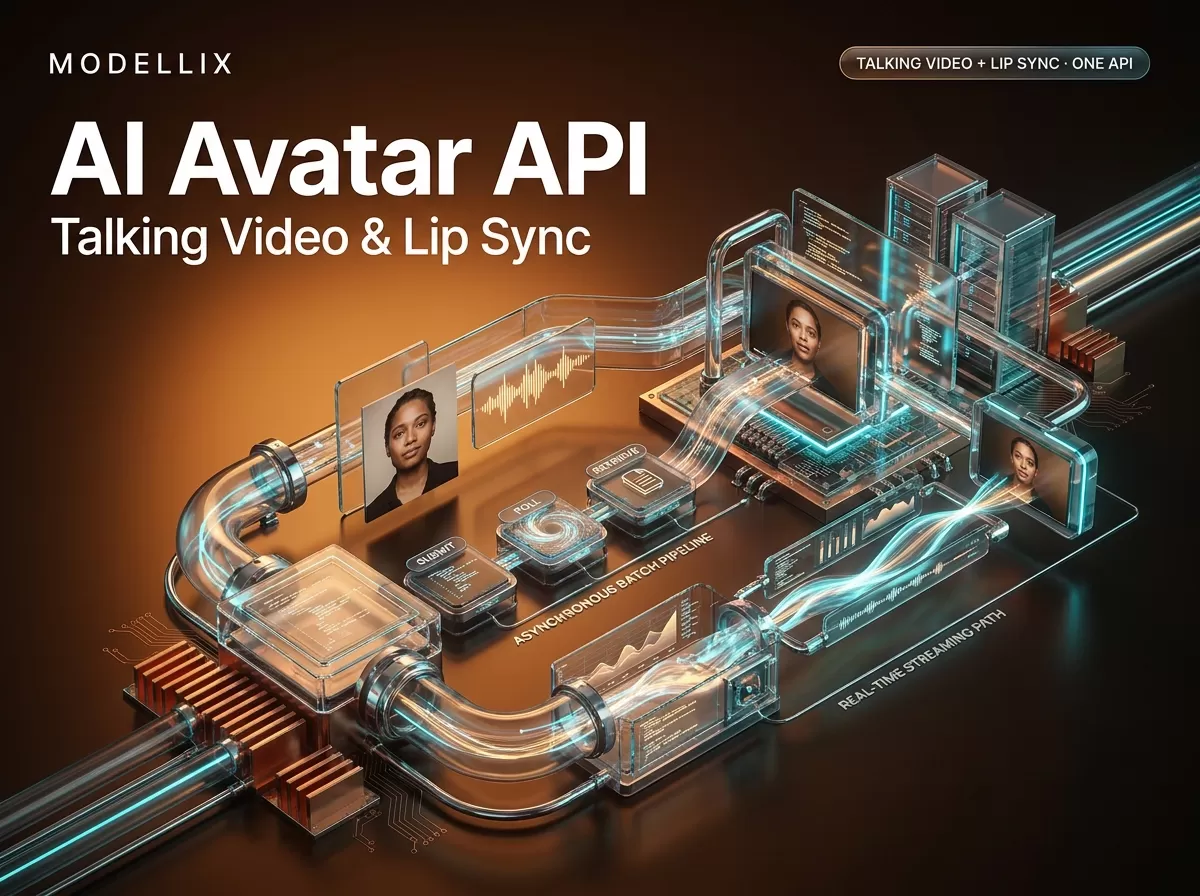
AI Avatar API: Talking Video & Lip Sync Integration Guide
AI avatar APIs split into talking-video, lip sync, and real-time streaming. Compare 2026 pricing with units matched and walk a working Python integration.
Modellix
Guides — Browse Modellix Blog guides and insights by category. Page 4.
AI avatar APIs split into talking-video, lip sync, and real-time streaming. Compare 2026 pricing with units matched and walk a working Python integration.

An AI media generation API turns images and video into REST calls. Compare route types, billing units, free tiers, and a working async pipeline in 2026.
Reve API explained: create, edit, and remix endpoints, credit-based pricing, real cost per image, and direct versus aggregator routes for Reve image models.
Google shuts down the Imagen 4 API on August 17, 2026. Compare official pricing with aggregator routes, migrate to Nano Banana without breaking your code.
OpenAI retired the Sora 2 Videos API on September 24, 2026. Identify affected calls, save outputs, and compare live video API routes for migration.
Google's virtual try-on API (virtual-try-on-001) costs $0.06 per image. Verified status, working Python and REST code, limits, and alternatives, August 2026.

How to get a MiniMax API key, what it costs, and how to make your first API call. Covers key types, pay-as-you-go pricing, code samples, and error codes.

Use SkyReels V4 through its official developer platform. See the API setup, pricing check, and live video alternatives on Modellix.
Seedream 4.5 API pricing: official BytePlus at $0.04/image, aggregator routes with no activation, model IDs, error handling, and working code.
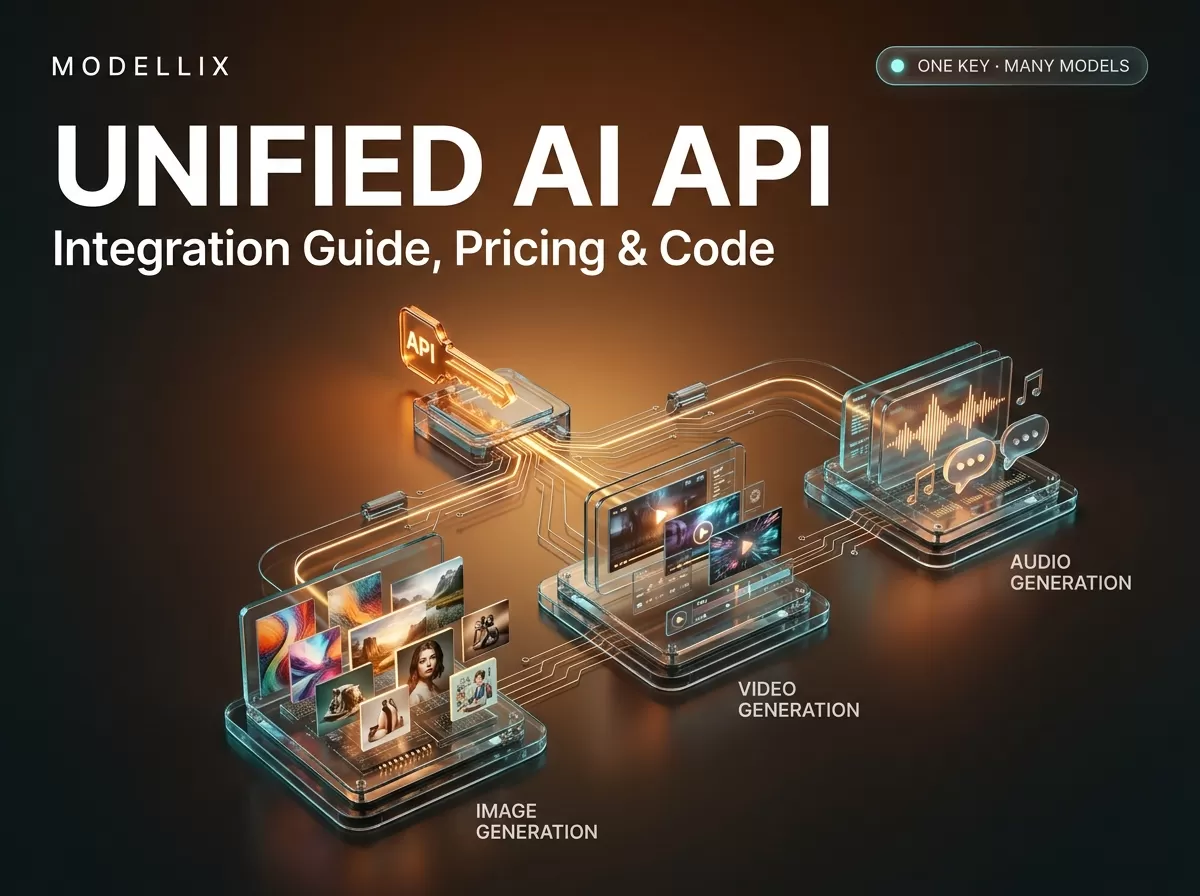
A unified AI API routes image, video, and audio generation models behind one key and one bill. See how one works, what it costs, and code you can run today.

What an AI motion control API is, how Kling, PixVerse, and Vidu motion endpoints work, live per-second pricing, and a Python template.

Flux Kontext API pricing and code: official BFL rates at $0.04/image, fal.ai and Replicate routes, async polling, multiref editing, and the FLUX.2 question.