
About PixVerse Models
PixVerse is an AI-powered video generation platform that transforms text prompts and images into high-quality, creative short videos with features like real-time interaction, AI effects, and one-click storytelling.
All PixVerse Models
Video to Video
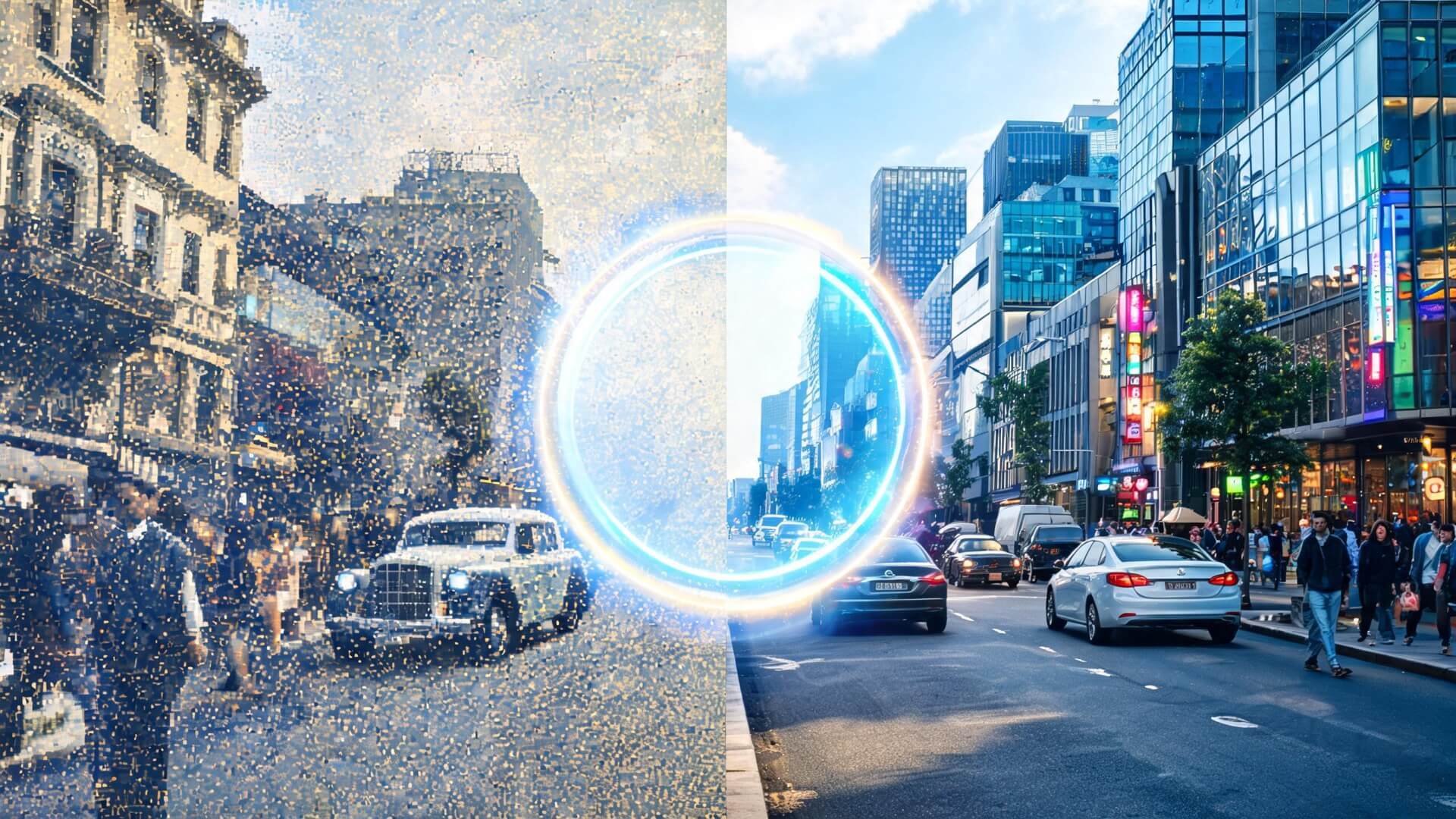
pixverse/upscale-video
[Core Function] PixVerse Upscale increases the resolution and clarity of an existing video. [Strengths] Sharper detail and higher-resolution output without changing content. [Best For] Enhancing low-resolution footage, finalizing clips for delivery. [Limitations] Requires an input video; it enhances quality, it does NOT change content, style, or motion. [Routing] Use when the user wants to improve the resolution/quality of an existing video, not to generate, restyle, or extend content.

pixverse/motion-control
[Core Function] PixVerse Motion Control (Mimic) animates a subject image so it follows the motion of a reference video. [Strengths] Transfers human/animal motion from a driving video onto a still subject. [Best For] Making a character mimic a dance or action, motion retargeting onto a photo. [Limitations] Do NOT use this if you only have a video and no subject image (use Restyle or Extend instead), or if you need 1080p output (only 360p/540p/720p are supported). It requires BOTH a subject image (with a clear person or animal) AND a reference video (with a person as the primary focus). [Routing] Use when the user has one subject image and one motion reference video and wants the subject to mimic that motion.

pixverse/v6-video-extend
[Core Function] PixVerse v6 Extend continues an existing video, generating additional seconds guided by a text prompt. [Strengths] Seamless continuation of the existing motion and scene. [Best For] Lengthening clips, continuing an action, adding an ending to footage. [Limitations] Do NOT use this to create a video from scratch (use Text-to-Video) or to restyle (use Restyle). It requires an input video; both duration and quality are required, with duration limited to 1-15 seconds added per call and output resolution up to 1080p. [Routing] Use when the user wants to make an existing video longer or continue its action.

pixverse/video-restyle
[Core Function] PixVerse Restyle re-renders an existing video into a new visual style. [Strengths] Consistent style transfer across all frames. [Best For] Turning footage into anime/3D/painterly looks, stylized remixes. [Limitations] Do NOT use this to change content, motion, or add new scenes; it only re-renders the visual style of an existing video. It requires an input video, and you must provide EITHER restyle_id (a preset style code from the PixVerse restyle list) OR restyle_prompt (free-text style, max 2048 chars), not both. [Routing] Use when the user wants to change the look of an existing video. Use restyle_id for an official preset, restyle_prompt for a custom style.

pixverse/lipsync
[Core Function] PixVerse Lip Sync drives a talking video so the subject's lips match given audio or text-to-speech. [Strengths] Accurate lip synchronization for talking-head videos; supports either an existing audio track or TTS from a chosen speaker voice. [Best For] Dubbing, virtual presenters, character dialogue, localizing spoken video. [Limitations] Do NOT use this to generate new motion or change content; it only re-times the subject's lips on an existing video. It requires an input video, and you must provide EITHER audio_url OR (speaker_id + tts_content), not both. [Routing] Use when the user has a video and wants the speaker's lips to match speech. Use audio_url for an existing voice track; use speaker_id (a named voice code) + tts_content (max 140 chars) to synthesize speech from text.
Image to Video

pixverse/c1-r2v
[Core Function] PixVerse c1 reference-to-video (fusion) generates a video from a prompt while preserving subjects from 1-7 reference images; each reference can be tagged as subject/background and named for @-reference in the prompt. [Strengths] Precise multi-subject composition and identity preservation. [Best For] Putting specific characters/objects into a new scene, multi-character interactions. [Limitations] Do NOT use this for single-image animation (use Image-to-Video), two-frame transitions (use First-Last-Frame), or text-only generation (use Text-to-Video). It requires 1-7 reference images and a required aspect_ratio, and supports up to 1080p and a maximum of 15s. [Routing] Use when the user provides one or more reference images to be fused into the video, especially when distinguishing subject vs background or naming references for the prompt. The v6 and c1 reference-to-video variants accept identical parameters; choose the version the user requests.

pixverse/v6-r2v
[Core Function] PixVerse v6 reference-to-video (fusion) generates a video from a prompt while preserving subjects from 1-7 reference images; each reference can be tagged as subject/background and named for @-reference in the prompt. [Strengths] Precise multi-subject composition and identity preservation. [Best For] Putting specific characters/objects into a new scene, multi-character interactions. [Limitations] Do NOT use this for single-image animation (use Image-to-Video), two-frame transitions (use First-Last-Frame), or text-only generation (use Text-to-Video). It requires 1-7 reference images and a required aspect_ratio, and supports up to 1080p and a maximum of 15s. [Routing] Use when the user provides one or more reference images to be fused into the video, especially when distinguishing subject vs background or naming references for the prompt. The v6 and c1 reference-to-video variants accept identical parameters; choose the version the user requests.

pixverse/c1-fl2v
[Core Function] PixVerse c1 first-last-frame generates a video that transitions from a start frame to an end frame, guided by a prompt. [Strengths] Controlled start/end composition with smooth interpolation. [Best For] Morphs, scene transitions, before/after motion. [Limitations] Do NOT use this if you only have a single image (use Image-to-Video) or lack an end frame; it requires exactly two images (a first and a last frame) and supports up to 1080p and a maximum of 15s. [Routing] Use when the user provides a start image AND an end image. For one image use Image-to-Video. The v6 and c1 first-last-frame variants accept identical parameters; choose the version the user requests.

pixverse/v6-fl2v
[Core Function] PixVerse v6 first-last-frame generates a video that transitions from a start frame to an end frame, guided by a prompt. [Strengths] Controlled start/end composition with smooth interpolation. [Best For] Morphs, scene transitions, before/after motion. [Limitations] Do NOT use this if you only have a single image (use Image-to-Video) or lack an end frame; it requires exactly two images (a first and a last frame) and supports up to 1080p and a maximum of 15s. [Routing] Use when the user provides a start image AND an end image. For one image use Image-to-Video. The v6 and c1 first-last-frame variants accept identical parameters; choose the version the user requests.

pixverse/c1-i2v
[Core Function] PixVerse c1 I2V animates a single starting image into a video guided by a text prompt. [Strengths] Smooth, prompt-guided motion from one frame; optional audio. [Best For] Bringing a photo/illustration to life, product showcases, quick cinematic motion from a still. [Limitations] Do NOT use this for two-frame transitions (use First-Last-Frame), multi-subject fusion (use Reference-to-Video), or text-only generation (use Text-to-Video). It requires exactly one starting image, does not support multi-clip, and supports up to 1080p and a maximum of 15s. [Routing] Use when the user provides one starting image. The c1 variant matches v6 inputs but does not support multi-clip generation; choose c1-i2v when the user requests the c1 model and multi-clip is not needed.

pixverse/v6-i2v
[Core Function] PixVerse v6 I2V animates a single starting image into a video guided by a text prompt. [Strengths] Smooth, prompt-guided motion from one frame; optional audio and multi-clip. [Best For] Bringing a photo/illustration to life, product showcases, quick cinematic motion from a still. [Limitations] Do NOT use this for two-frame transitions (use First-Last-Frame), multi-subject fusion (use Reference-to-Video), or text-only generation (use Text-to-Video). It requires exactly one starting image and supports up to 1080p and a maximum of 15s. [Routing] Use when the user provides one starting image. The v6 and c1 variants take the same inputs except v6 also supports multi-clip generation (generate_multi_clip_switch); choose v6-i2v when the user wants multi-clip output or requests the v6 model.
Text to Video

pixverse/c1-t2v
[Core Function] PixVerse c1 T2V generates a video purely from a text prompt, with no input image. [Strengths] Strong prompt adherence and smooth motion; optional audio. [Best For] Turning an idea or script into video, concept visualization, story beats, social clips from text. [Limitations] Do NOT use this when the user provides a starting image, two frames, or reference images; route to Image-to-Video, First-Last-Frame, or Reference-to-Video instead. c1 does not support multi-clip. [Routing] Use for text-only generation. The c1 variant takes the same inputs as v6 except it does not support multi-clip generation; choose c1-t2v when the user requests the c1 model and multi-clip is not needed.

pixverse/v6-t2v
[Core Function] PixVerse v6 T2V generates a video purely from a text prompt, with no input image. [Strengths] Strong prompt adherence and smooth motion; optional audio and multi-clip generation. [Best For] Turning an idea or script into video, concept visualization, story beats, social clips from text. [Limitations] Do NOT use this when the user provides a starting image, two frames, or reference images; route to Image-to-Video, First-Last-Frame, or Reference-to-Video instead. [Routing] Use for text-only generation. v6 additionally supports multi-clip generation (generate_multi_clip_switch), which c1 does not; choose v6-t2v when multi-clip output is needed or the v6 model is requested.