Replicate’s superpower is also its tax. Its catalog runs into the tens of thousands of community models, more than any media platform on this list, and it handles language models and media generation on one bill. But you pay for that breadth by the second of compute, and a model that has gone cold can spend those seconds just loading before it generates a single frame. For steady production traffic that math is fine. For bursty, latency-sensitive, or cost-capped workloads, developers go looking for a Replicate alternative with more predictable pricing and warmer starts.
This guide compares the six strongest Replicate alternatives as of June 2026: fal.ai, Together AI, Baseten, Hugging Face Inference, Runware, and Modellix. For each one you get what it is genuinely good at, where it falls short, how its pricing works, and the kind of team it fits. The goal is not to crown a winner. It is to help you switch with your eyes open.

Why Teams Look for a Replicate Alternative
Replicate is a strong, developer-loved product. People leave or supplement it for specific, repeatable reasons, and naming them honestly is the fastest way to find the right replacement.
Per-second compute pricing is hard to forecast. Replicate bills most models by the second of GPU time on a given hardware tier. When generation time varies with prompt, resolution, or model load, your per-job cost varies with it, which makes budgeting a moving target compared to a flat per-request rate.
Cold starts add latency. A model that is not kept warm has to load before it runs. On infrequently called models that cold-start delay can add seconds, sometimes more, on top of generation time. For interactive or real-time features, that tail latency matters.
Cost at scale. Independent comparisons put Replicate at the higher end for comparable media workloads, often pricier per run than fal.ai. Teams generating at volume hunt for a lower, more predictable floor.
Multimodal under one roof. Replicate spans image, video, audio, and LLMs, but many teams want a media-first integration that routes the exact mix of providers they depend on, with one consistent job lifecycle rather than per-model quirks.
Access to Chinese models. Seedance, Kling, Wan, Hailuo, Qwen, and Seedream sit at or near the top of the 2026 leaderboards. International teams want them through one API without a China-region account, and coverage varies by platform.
Keep your own reason in mind as you read. The best Replicate alternative is the one that fixes your specific gap, not the one with the longest model list.
The 6 Best Replicate Alternatives in 2026
Here is the shortlist. If your Replicate workload is media generation, start with Modellix: it removes the two things teams actually leave Replicate for, unpredictable per-second bills and cold starts, behind one API key for image, video, and audio. Honest one-line summaries below, detailed breakdowns after.
| Alternative | Best for | Watch out for |
|---|---|---|
| Modellix | One API key for image, video, and audio, transparent per-request pricing, no cold starts | Newer, curated catalog, not tens of thousands of community models |
| fal.ai | Fastest media inference, per-request pricing | Smaller catalog than Replicate |
| Together AI | Open-source LLM inference and fine-tuning at scale | Leans language, less media-first |
| Baseten | Production deployment with dedicated autoscaling | More deploy-it-yourself than turnkey catalog |
| Hugging Face Inference | Largest open-source model hub | Serverless limits, endpoints need provisioning |
| Runware | Lowest per-image cost | Image-centric, narrow scope |
1. Modellix
Start here if your Replicate workload is media. Modellix is a unified AI media API: image, video, and audio models from many providers behind one endpoint, one API key, and one billing dashboard, with transparent per-request pricing and no cold starts to budget around. The catalog leans into the models that top the 2026 leaderboards, including Chinese models like Seedance, Kling, Wan, Hailuo, Seedream, and Qwen, available to international teams without a China-region account, alongside Google Veo, Imagen, Nano Banana, and OpenAI GPT Image.
Official URL: modellix.ai
Related Modellix reads: Seedance 2.0 API, Kling API pricing, Seedream API, Google AI models on Modellix
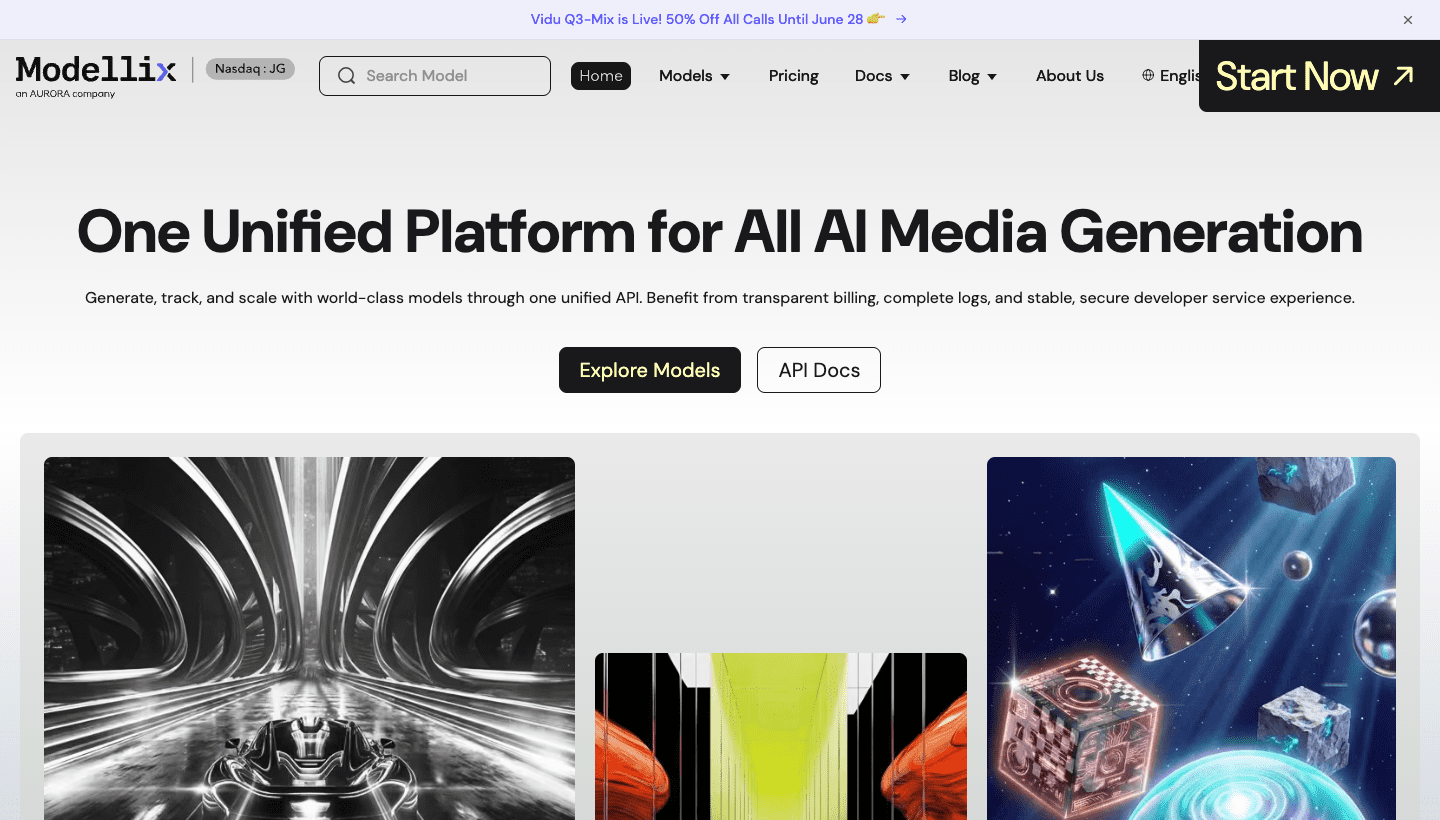
Service targets: teams replacing Replicate for image, video, and audio generation that want predictable per-request pricing, Chinese model access, one API key, one billing dashboard, and one async job lifecycle.
Pros
- One API key and one billing dashboard for image, video, and audio.
- Access to Seedance, Kling, Wan, Hailuo, Seedream, Qwen, Veo, Imagen, and more.
- Transparent per-request pricing with per-job cost logging and no cold starts.
Cons
- Newer than Replicate.
- Curated catalog, not tens of thousands of community models.
- Less suited to obscure open-source model experiments.
Pricing: transparent per-request and per-second pricing with per-job cost logging, no cold-start tax. Get a free API key and run your first model in minutes.
2. fal.ai
fal.ai is the most direct Replicate alternative for media teams. It built its reputation on speed, optimizing text-to-image and video latency, and it prices by the request rather than by the raw second of compute, which makes per-job cost easier to predict. Independent comparisons put it at roughly 30 to 50% cheaper than Replicate for comparable media workloads.
Official URL: fal.ai
Related Modellix read: fal.ai alternatives
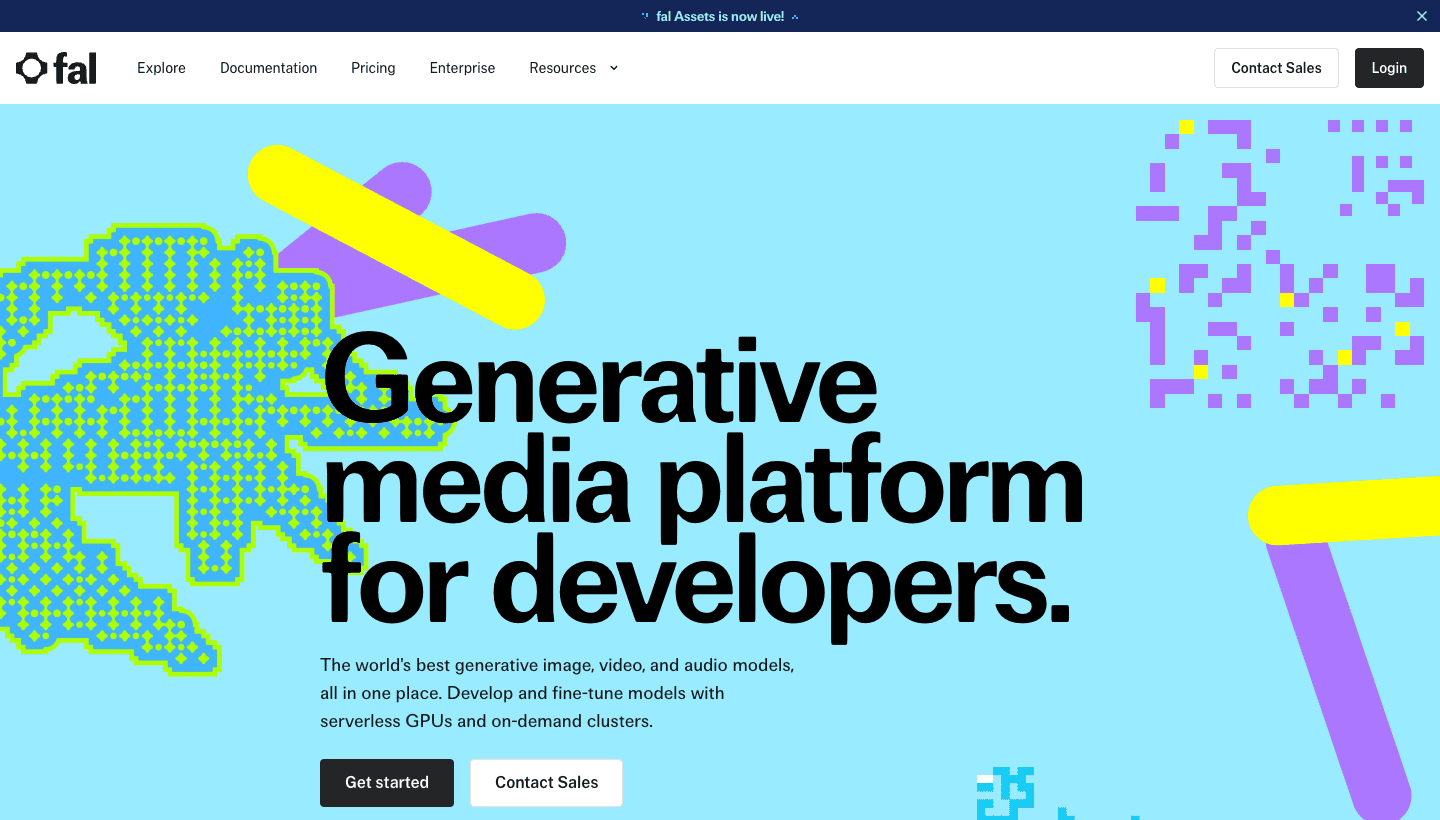
Service targets: product and growth teams that need fast image, video, audio, or 3D generation behind a predictable API, especially when latency and cost-per-request forecasting matter more than catalog depth.
Pros
- Fast media inference with request-oriented pricing.
- Strong fit for image, video, audio, and real-time generation workflows.
- Curated model catalog reduces long-tail maintenance noise.
Cons
- Smaller catalog than Replicate's community library.
- Less useful when you need obscure research models.
- Not the strongest pick for open-source LLM infrastructure.
Pricing: model-specific per-request pricing. Validate live rates before committing, since media model pricing changes frequently.
3. Together AI
Together AI is a full-stack inference and training platform built around open-source models. It offers serverless inference, dedicated GPU endpoints, batch processing at a discount, and fine-tuning, with per-token pricing for serverless text and per-GPU-hour pricing for dedicated capacity.
Official URL: together.ai
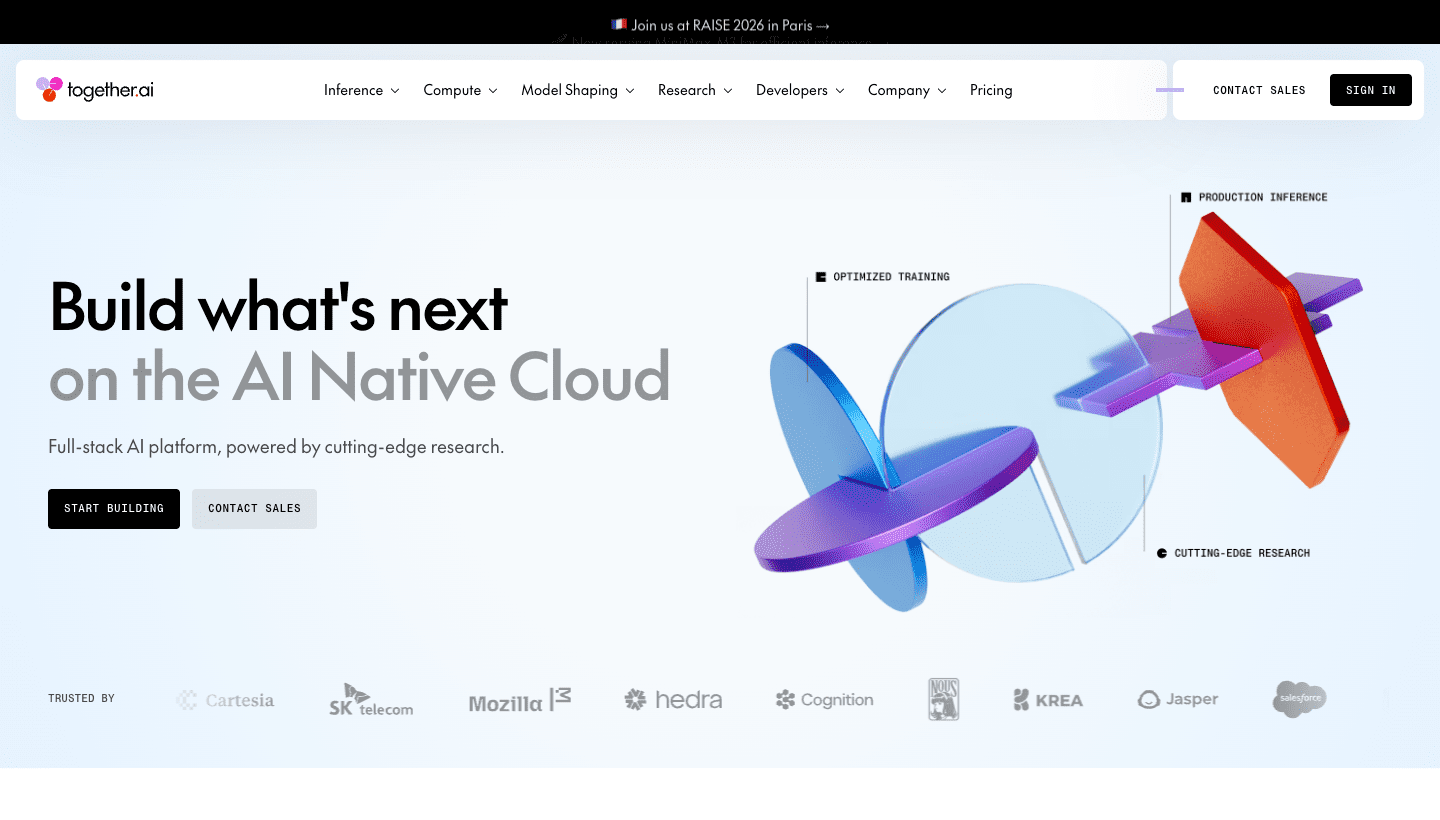
Service targets: AI infrastructure teams running open-source LLM inference, fine-tuning, batch jobs, or dedicated GPU endpoints, with media generation as a secondary need.
Pros
- Strong open-source LLM coverage for serverless and dedicated endpoints.
- Fine-tuning, batch processing, and GPU clusters are part of the same platform.
- Good fit when your Replicate replacement also needs language workloads.
Cons
- LLM-first positioning makes it less direct for media-only apps.
- Video and creative media coverage is not the main buyer story.
- Dedicated capacity requires GPU-hour planning.
Pricing: serverless text is typically token-based, while dedicated infrastructure uses GPU-hour or cluster pricing. If video model quality is also part of the evaluation, compare platform choice against the best AI video generation APIs of 2026.
4. Baseten
Baseten is built for putting a specific model into production with control. You package a model, deploy it to dedicated autoscaling GPU infrastructure, and get fast scale-up, scale-to-zero, and observability around it. For teams that have outgrown a shared catalog and want a model running on their own managed endpoint, it is a strong Replicate alternative.
Official URL: baseten.co
Service targets: engineering teams that already know which model they want to run and need managed production infrastructure, autoscaling, and observability around that model.
Pros
- Production deployment control for known models.
- Autoscaling, scale-to-zero, and runtime observability are core strengths.
- Good fit for teams moving beyond shared community endpoints.
Cons
- More deploy-it-yourself than instant model catalog.
- You manage the model package and production shape.
- Cost depends on infrastructure configuration, not only model choice.
Pricing: infrastructure-oriented pricing tied to runtime capacity, scaling behavior, and the deployment shape you choose.
5. Hugging Face Inference
Hugging Face is the center of gravity for open-source models, and its Inference offering comes in two shapes: a serverless Inference API for quick calls and dedicated Inference Endpoints for production. The breadth of community models is unmatched, and for teams already living in the open-source ecosystem it is the most natural place to run them.
Official URL: huggingface.co/inference-endpoints
Service targets: teams already using Hugging Face models, datasets, Spaces, or open-source workflows, especially when model discovery and community ecosystem matter.
Pros
- Largest open-source model hub and community ecosystem.
- Serverless API is useful for quick tests and prototypes.
- Dedicated Inference Endpoints provide a production path.
Cons
- Serverless limits can be awkward for steady production traffic.
- Dedicated endpoints require sizing, provisioning, and monitoring.
- Less turnkey for media routing across many commercial providers.
Pricing: serverless and dedicated endpoint pricing depend on model, hardware, region, and runtime configuration.
6. Runware
Runware competes on one axis above all: cost. Public pricing reaches as low as roughly $0.0006 per image, which makes it one of the cheapest ways to generate images at scale, with fast inference to match. If your use case is high-volume image generation and price per image is the metric your CFO watches, Runware belongs on your shortlist. Its scope is narrower and image-centric, so it is less of a fit when you need video, audio, and 3D in the same integration.
Official URL: runware.ai
Related Modellix read: GPT Image 2 API guide
Service targets: image-heavy products where price per generated image and fast request handling are the main optimization metrics.
Pros
- Very low public image-generation pricing.
- Clear API and routing story for high-throughput generation.
- Good fit for products where image volume dominates the bill.
Cons
- More image-centric than broad multimodal platforms.
- Less suitable when video, audio, and LLM routing are all required.
- Catalog depth is narrower than Replicate.
Pricing: public image pricing starts very low, but final cost depends on model, size, and production volume.
Replicate vs the Alternatives: Pricing and Coverage at a Glance
Use this as a starting filter, then validate prices against each provider’s live page, since they change often. Figures reflect public list pricing as of June 2026.
| Platform | Multimodal range | Catalog size | Pricing model | Chinese models |
|---|---|---|---|---|
| Modellix Unified API | Image, video, audio | Curated leaders | Transparent per request and per second | ✅ Full set, no China account |
| Replicate | Image, video, audio, LLMs | Tens of thousands | Per-second compute | 🟡 Some |
| fal.ai | Image, video, audio, 3D | ~600 models | Per request, speed-optimized | 🟡 Some |
| Together AI | LLM-first, some image | Large open-source set | Per-token / per-GPU-hour | 🟠 Limited |
| Baseten | Any model you deploy | Bring your own | Per-minute autoscaling GPU | ➖ Bring your own |
| Hugging Face | Image, text, audio | Largest open-source hub | Serverless tier / per-hour endpoints | 🟡 Some |
| Runware | Image-centric | Focused | Lowest per image (~$0.0006) | 🟠 Limited |
No single row wins every column. Replicate wins catalog size, Runware wins raw image cost, Together wins open-source LLM work, Baseten wins dedicated production control, and the unified-API approach wins when your real problem is integration overhead and unpredictable bills rather than the price of any one model.
When a Unified Multimodal API Is the Better Trade
If you only ever run one model on steady, predictable traffic, Replicate’s per-second model is workable and the catalog is unbeatable. The picture changes the moment your product needs more than one modality or more than one provider, or your traffic is bursty enough that cold starts and variable compute time show up on the bill.
Wiring one platform for video, a second for a model it lacks, and a third for audio means three accounts, three API keys, three billing dashboards, and three sets of retry and polling logic. The day you want to compare two models on the same prompt, you are reconciling two response schemas by hand.
A unified media API collapses that. With Modellix, one endpoint, one API key, and one billing dashboard cover image, video, and audio across providers, with a consistent async submit-poll-retrieve lifecycle. The idempotency and observability setup you build once works for every model. For international teams, it removes the China-region account problem for Seedance, Kling, Wan, Hailuo, and other models that lead the leaderboards. And because billing is transparent per request and per second with per-job cost logging, the cost questions procurement asks have answers in the dashboard rather than a support ticket.
This is not a claim that Modellix is the cheapest option on any single model. It is the argument that integration overhead and unpredictable compute bills, not model price, are the larger cost for most teams running more than one modality, and that is the cost a unified API removes.
How to Choose Your Replicate Alternative
Match the platform to the gap you are actually trying to close.
| If your main reason is | Start with |
|---|---|
| You want faster media inference at predictable per-request prices | fal.ai |
| You generate images at massive volume on price | Runware (lowest per image) |
| You need open-source LLM inference or fine-tuning too | Together AI |
| You want a known model on dedicated production infrastructure | Baseten |
| You live in the open-source ecosystem | Hugging Face Inference |
| You need image, video, and audio under one API | Modellix |
| You need top Chinese video models without a China account | Modellix |
| You answer to procurement on vendor stability | Modellix (NASDAQ-listed parent) |
A practical move: shortlist two, run the same prompt and the same production load through both for a week, and compare not just price per output but discard rate, latency under concurrency including cold starts, and how much glue code each one cost you. The cheapest model on paper is not always the cheapest pipeline. For a parallel breakdown of the speed-first platform, see our fal.ai alternatives guide, and for video specifically, the best AI video generation APIs of 2026.
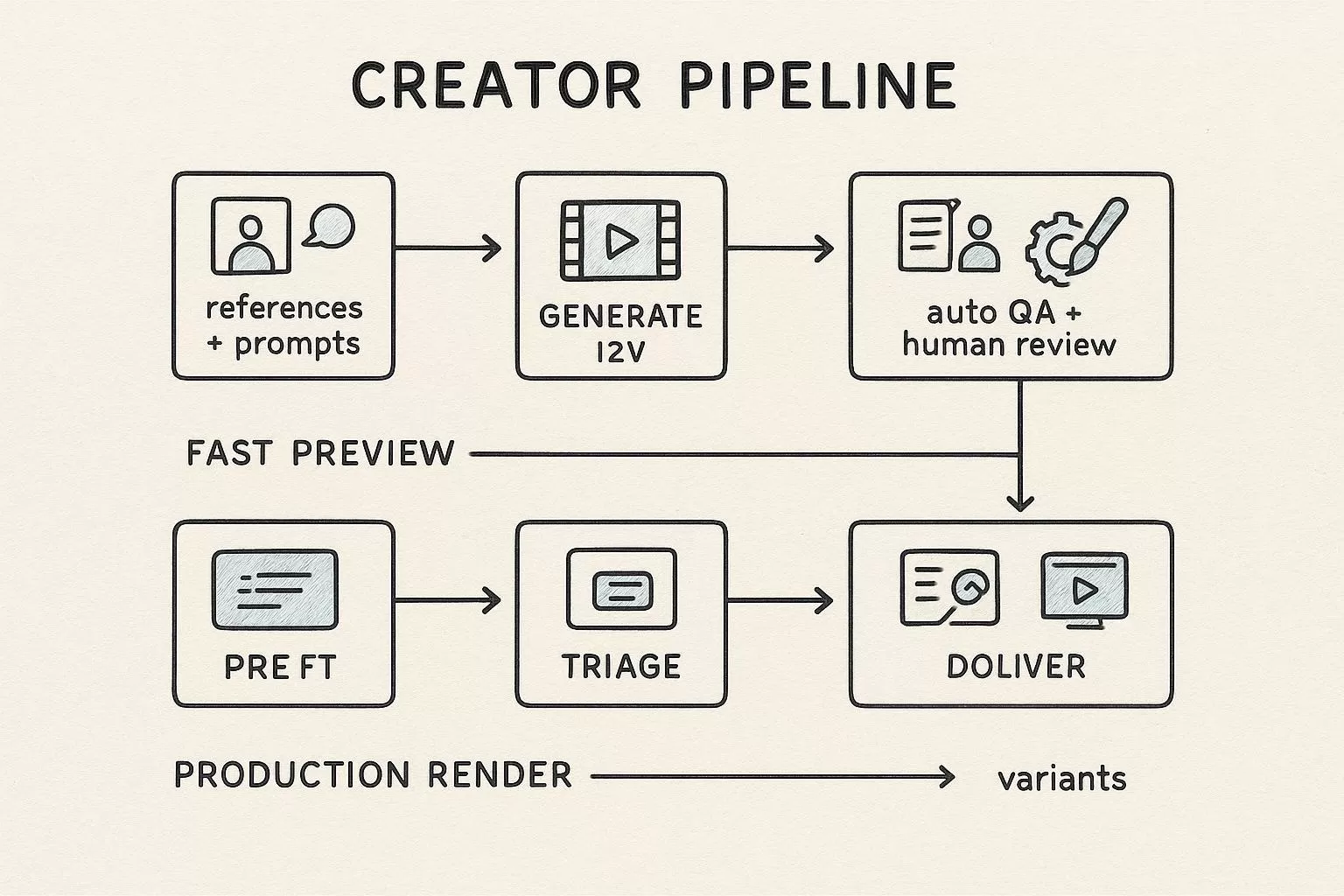
Modellix collection
Shortlist AI Video Models for Production
Compare text, image, and reference-led video workflows across multiple models from one production surface.
Good first tests: Seedance 2.0Wan 2.7HappyHorse 1.1
Explore the collectionHow to Test Media Models Before Switching From Replicate
Most readers should not start with code. Use the Modellix Playground to run one real media generation job first, then move to API, Skill, or CLI only after the prompt, settings, cost, and output format are worth repeating. This keeps the guide useful for creators, product teams, and technical buyers, while developers still get a clean implementation path.
Quick start guide
Choose the right entry point for Replicate alternatives
Playground: Best for most readers and first-time tests. Choose one model from the catalog and run the same prompt you would otherwise test on Replicate: https://www.modellix.ai/models.
API docs: Use this when a developer is ready to turn the validated prompt into a backend, batch, or product workflow. Start with the unified API path you would use after choosing a Replicate alternative: https://docs.modellix.ai/ways-to-use/api.
Skill: Use the Modellix Skill when an AI agent should create media from your workspace without hand-writing every request: https://docs.modellix.ai/ways-to-use/skill.
CLI: Use the CLI for repeatable terminal commands, local scripts, or scheduled generation jobs: https://docs.modellix.ai/ways-to-use/cli.
The links above are the routing layer. The walkthrough below is the practical path for the main audience: create an account, use the included credit, run one Playground job, and only then decide whether an API key is necessary.
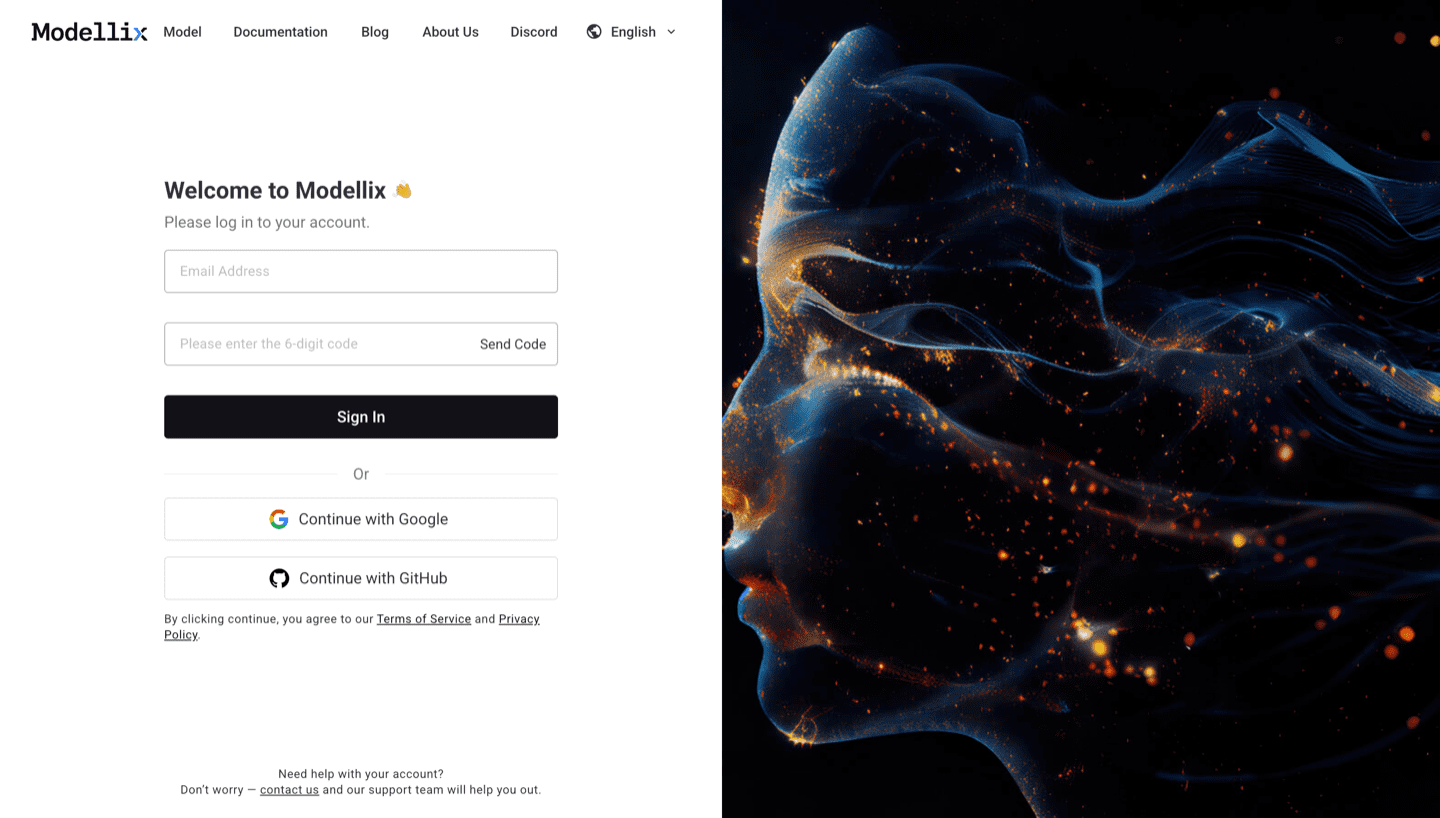
Step 1: Create or Sign In and Use the Included $1 Credit
Create or sign in to a Modellix account before you test models from this Replicate alternative stack. New users can use the included $1 credit to validate model behavior, prompt quality, output download, and request logging without committing to a full integration.
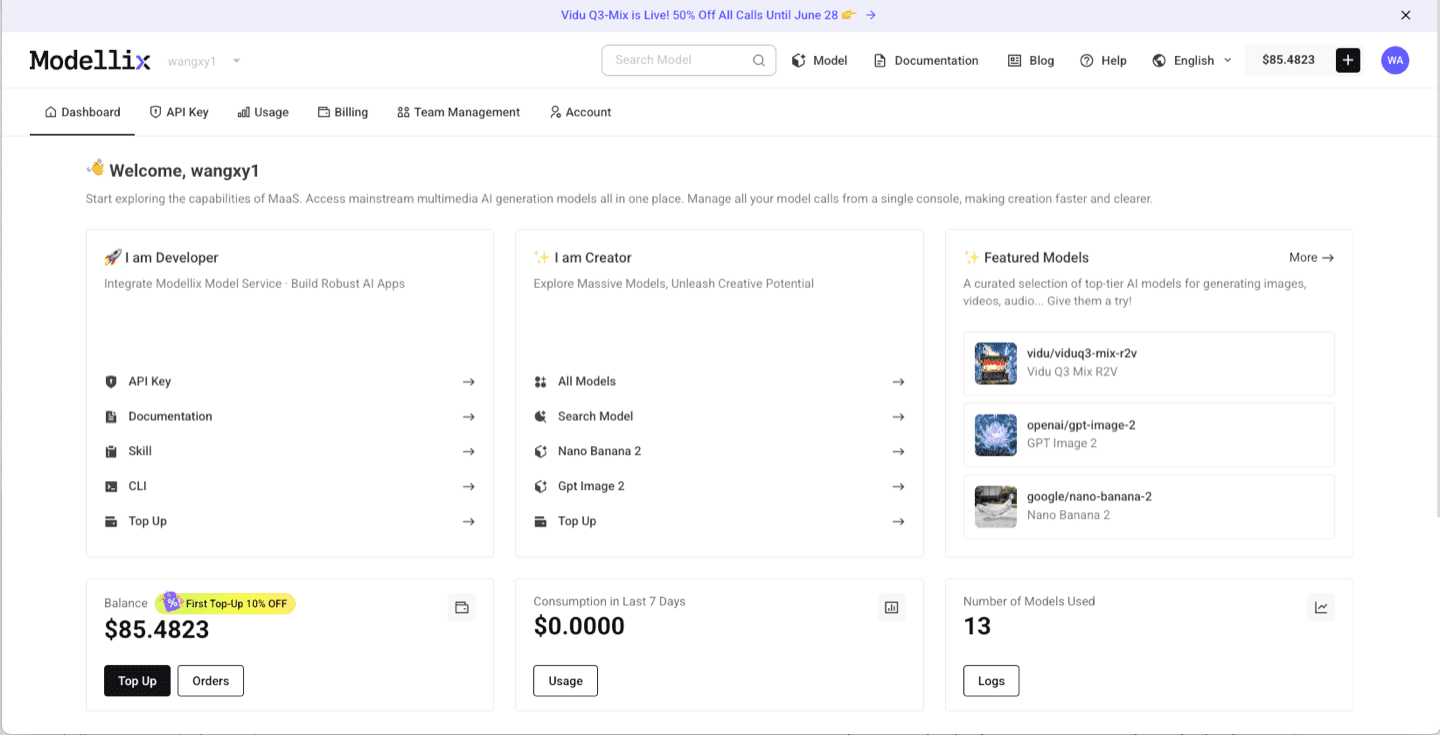
Step 2: Open the Model Page and Run One Prompt
After login, use the dashboard shortcuts or open the Modellix model catalog. For mixed media comparisons, pick one image or video workload that reflects your real use case, then compare output quality, cost, and request behavior. This step is the fastest way to learn whether the model fits before you read more code.
Step 3: Optimize the Prompt and Review the Output
Before you automate anything, improve the prompt and inspect one real output. The example below uses Vidu Q3 Mix R2V, but the same Playground pattern applies across Modellix model pages: write the prompt, use prompt enhancement when the brief is too thin, run the job, and review the generated media before creating an API workflow.

After the run finishes, check whether the result matches the prompt, motion, framing, and output format you need. A real preview is the conversion point: if the result works, move to API key, Skill, or CLI; if it does not, iterate in Playground before spending engineering time.

Step 4: Create an API Key Only When the Test Needs to Repeat
Stay in Playground for one-off exploration. Create an API key when a backend service, agent, batch script, or CLI workflow needs to repeat the same prompt pattern. This keeps the mainstream testing flow simple while giving developers a clean handoff point.
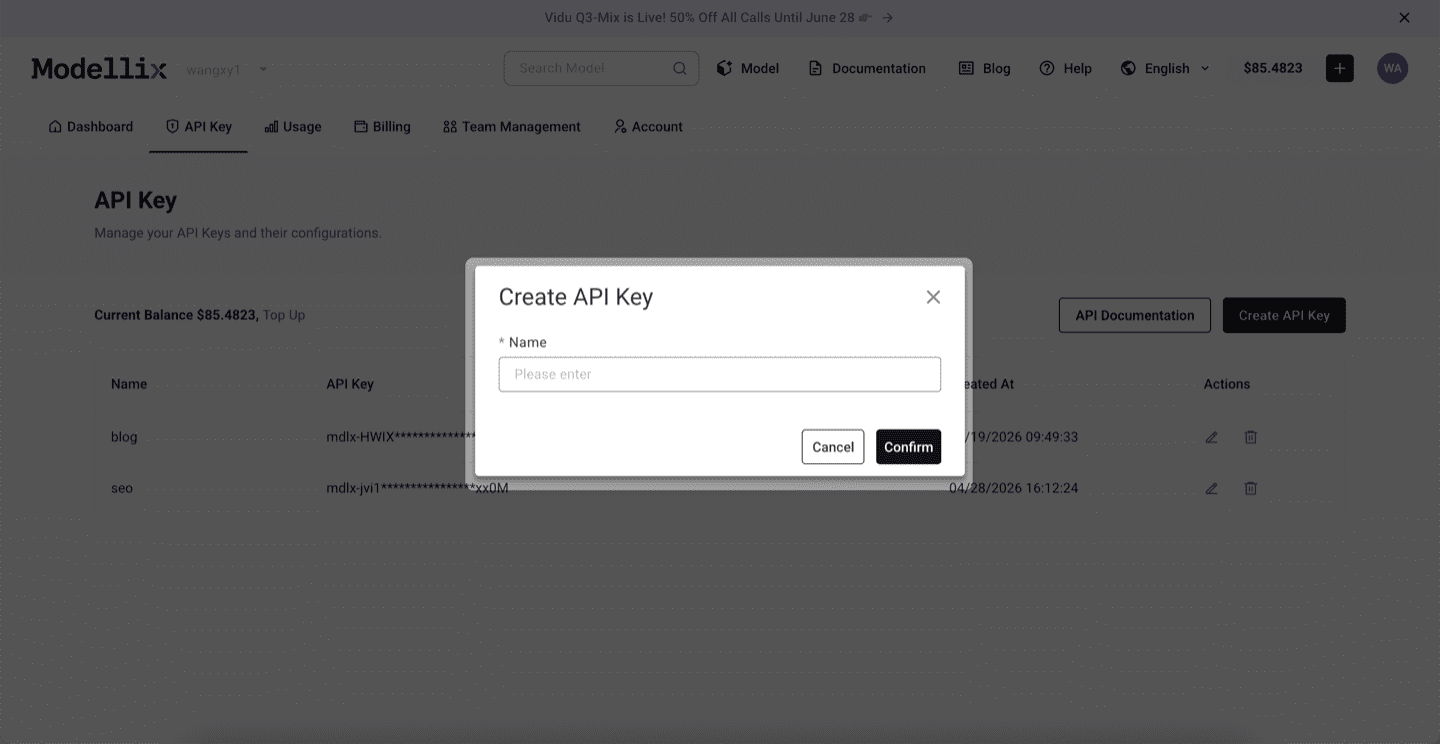
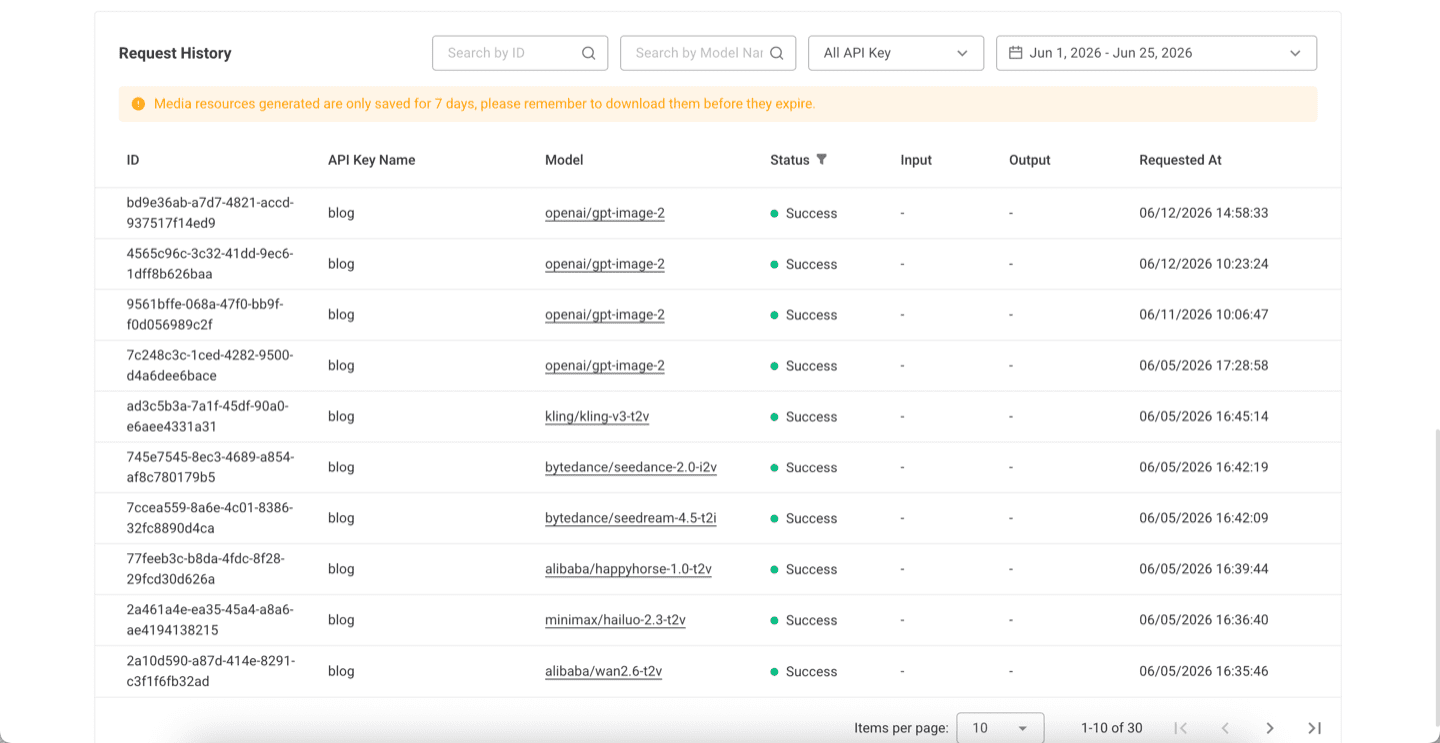
Step 5: Check Logs and Save the Result Before Scaling
Before scaling from one manual run to repeated API, Skill, or CLI usage, review request history. Logs confirm the model slug, API key name, task status, request time, and result retention window, which makes the workflow easier to debug after it leaves Playground.
Try a Media Model Next
The practical next step is to run one real job from the official site, not to copy a complex code sample too early. Start from the Modellix console, open the Modellix model catalog, and move to API, Skill, or CLI only after the output is good enough to repeat.
Check output and logs before you leave Replicate
Use the official model catalog to run one comparable image or video prompt with the included $1 credit. If the output and logs look right, then move the route into API, Skill, or CLI automation.
Frequently Asked Questions About Replicate Alternatives (2026)
What is the best Replicate alternative?
There is no single best one, only a best fit. fal.ai is the strongest for fast media inference at predictable per-request pricing, Runware for lowest per-image cost, Together AI for open-source LLM and fine-tuning work, Baseten for dedicated production deployment, and a unified media API like Modellix when you need image, video, and audio across providers, including Chinese models, through one integration.
Is there a cheaper alternative to Replicate?
Often, yes, depending on your workload. fal.ai runs roughly 30 to 50% cheaper than Replicate for comparable media tasks, and Runware lists per-image prices as low as roughly $0.0006 as of June 2026. Because Replicate bills by the compute-second, the gap widens for models with long or variable runtimes, so price your actual workload rather than comparing headline rates.
Replicate vs fal.ai: which should I use?
Replicate has a far larger model catalog and handles LLMs and media on one platform, while fal.ai is typically faster for media and priced per request rather than per compute-second, which makes per-job cost easier to forecast. Choose Replicate for catalog breadth and mixed LLM plus media work, and fal.ai when media speed and predictable pricing are the priority.
Why are cold starts a problem on Replicate?
Models that are not kept warm have to load before they run, and that cold-start delay adds latency on top of generation time, especially on models you call infrequently. Platforms that keep popular models warm or use a consistent managed lifecycle reduce that tail latency, which matters for interactive and real-time features.
Which alternatives support video and audio, not just images?
Replicate, fal.ai, Hugging Face, and Modellix all span multiple modalities. If a single unified integration across image, video, and audio is the priority, Modellix is built specifically for that, with one job lifecycle across providers.
Can I access Chinese AI models like Seedance, Kling, and Wan through these platforms?
Coverage varies. Some carry a subset. Modellix carries the full set of leading Chinese models (Seedance, Kling, Wan, Hailuo, Seedream, Qwen) and exposes them to international teams without a China-region account, which is a common reason teams add it alongside or in place of Replicate.
How do I migrate off Replicate without rewriting everything?
Pick an alternative with the same async submit-poll-retrieve pattern, then move one model at a time behind a feature flag. Platforms that use a consistent job lifecycle across models, like Modellix, let you reuse your polling, retry, and observability code so the migration is a slug change rather than a rewrite.
Provider details and pricing reflect public information as of June 2026 and change frequently. Validate against each provider’s live pricing before committing. Access image, video, and audio models, including the leading Chinese models, through a single API key at modellix.ai.