ByteDance opened Seedance 2.0 API access on April 16, 2026 , domestic via Volcano Engine, international via BytePlus , and the production numbers coming out of early adopters are hard to ignore. Studios report dropping from 100+ render attempts for a 2-second shot down to 3 attempts for a 15-second long-take. One brand campaign hit 20 million plays within 60 hours of release. The model ships as four distinct API variants (I2V, Fast I2V, V2V, Fast V2V), and picking the wrong one for your pipeline costs you latency, output quality, or both.
This guide covers everything verified as of April 2026: what each variant does and when to use it, how the async request lifecycle works with real Modellix endpoint examples, how pricing differs across tiers, and how international teams access it without a China-region account. Can you call it in production today, and which variant should your pipeline actually use?
Seedance 2.0 Capabilities Explained: I2V, V2V, and 4 Key Production Advantages
Most AI video APIs accept a text prompt or a single image. Seedance 2.0 accepts four modalities simultaneously: text, image, audio, and video. That changes the class of applications you can build.
Practically speaking, this means you can pass a reference image of a character, an audio track, a rough video clip as motion guidance, and a text prompt , and get a single coherent output. The model’s instruction-following in complex, multi-subject scenes is measurably better than previous generations, which matters when you’re producing at scale and can’t afford high discard rates.

Key capabilities that translate directly to production workflows:
- Long-take consistency. Seedance 2.0 can generate extended single-take sequences and continue them coherently from a prior clip. The model reads the motion rhythm of the previous segment and maintains it , no jump cuts from model drift.
- Physical accuracy. Lighting, collision dynamics, and real-world physics hold up across complex scenes. This is what enables use cases like robotics simulation data generation, where physical plausibility isn’t aesthetic , it’s a hard requirement.
- Portrait and copyright safety infrastructure. ByteDance built face-verification and portrait authorization flows into the platform. For enterprise workflows that deal with identifiable persons, this matters for compliance.
- High-fidelity virtual human library. Over 10,000 pre-cleared virtual avatars covering different ages and professions are available via the API, removing a major production bottleneck for teams that need licensable characters.
See it in action in ByteDance’s official Seedance 2.0 demo:
4 Variants Compared: I2V, Fast I2V, V2V, and Fast V2V Decision Guide
Seedance 2.0 is not a single model , it’s a family of four API endpoints, each serving a different input mode and speed/quality tradeoff. Calling the wrong one for your use case wastes cost or produces lower quality output than the model is capable of.
| Variant | Modellix Endpoint | Input Required | Max Resolution | Use When |
|---|---|---|---|---|
| I2V | seedance-2.0-i2v |
Image (1-9) + optional audio | 720p | Quality-first image-to-video; character reference workflows |
| Fast I2V | seedance-2.0-fast-i2v |
Image (1-9) + optional audio | 720p | Rapid prototyping; high-volume pipelines where speed matters |
| V2V | seedance-2.0-v2v |
Video (1-3) + optional image + audio | 720p | Style transfer, motion retargeting, video continuation |
| Fast V2V | seedance-2.0-fast-v2v |
Video (1-3) + optional image + audio | 720p | Fast iteration on video-to-video; batch processing |

A few things worth noting from the API spec:
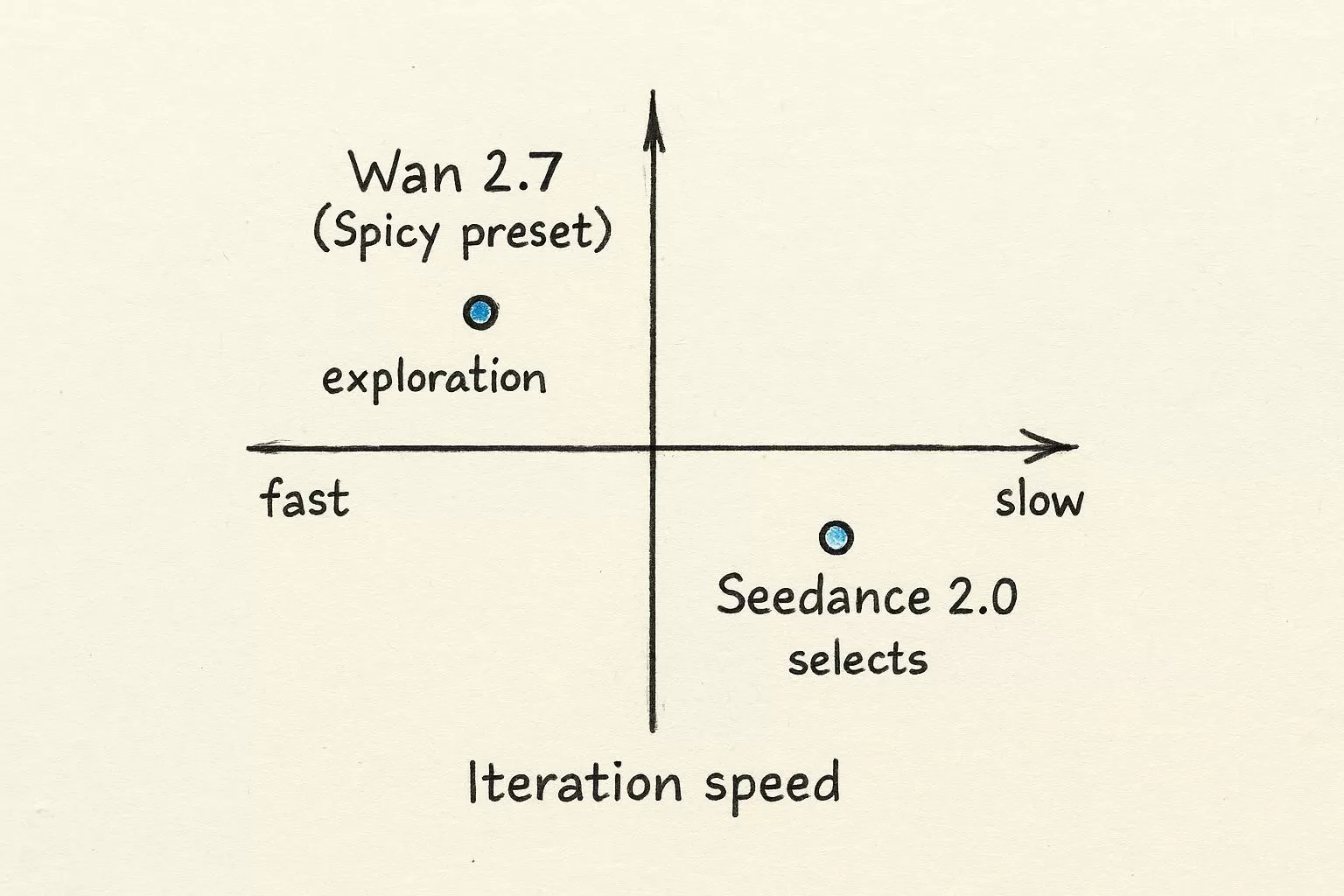
I2V vs Fast I2V: Both accept 1-9 reference images and up to 3 audio tracks alongside a text prompt. Fast I2V trades some quality for significantly lower latency. Use I2V for final production renders, Fast I2V for development passes and high-concurrency pipelines where you’re running many jobs in parallel.
V2V vs Fast V2V: Both accept 1-3 reference videos, 1-9 images, and 1-3 audio tracks. V2V is the full-quality variant , this is what you use for the long-take extension use case where you’re feeding a prior output back in to continue a sequence. Fast V2V is appropriate for rapid iteration on motion retargeting workflows.
Resolution cap: All four Seedance 2.0 variants currently max at 720p via the Modellix API. The resolution parameter supports 480p and 720p. If your pipeline requires 1080p output, plan for post-processing upscaling.
Duration control: The duration parameter accepts -1 for auto-length or explicit values from 4 to 15 seconds. For the 42-second long-take use case, chain multiple V2V calls rather than setting a single long duration , feed each output back as the reference video for the next call.
Audio generation: All variants include generate_audio: true by default. Set to false if you’re handling audio separately in your pipeline to avoid redundant processing cost.
API Request Lifecycle: The 3-Step Submit, Poll, and Retrieve Pattern
This section is for developers integrating Seedance 2.0 into production media workflows. Creative and product readers can use the model guidance above; backend teams should use the submit, poll, and retrieve pattern below for reliable automation.
Every Seedance 2.0 variant on Modellix uses the same async job pattern: submit, poll for status, retrieve results. The endpoint structure is consistent across all four variants, so the integration code you write for I2V works unchanged for V2V.

Step 1 , Submit the Job
Real Modellix endpoint for I2V (image-to-video):
1 | curl --request POST \ |
For V2V (video continuation), swap the endpoint and pass a video reference instead:
1 | curl --request POST \ |
The response is identical across all variants:
1 | { |
Pass large artifacts (videos, high-res images) as URLs rather than inline. For multimodal inputs combining image + audio + text, keep all references under the same request body , the model processes them as a unified context, not sequential inputs.
Step 2 , Poll for Status
Use the get_result.url from the submission response. Categorize responses into three buckets:
| Status Bucket | Examples | Action |
|---|---|---|
| In-progress | pending, processing |
Back off and re-poll with exponential backoff + jitter |
| Blocked | invalid_input, content_policy |
Fix the input. Do not retry as-is. |
| Terminal | success, failed |
Collect result or surface error. Stop polling. |
Recommended cadence: first check at 15 seconds, then exponential backoff starting at 5s, capped at 30s, maximum 12 total attempts. Add ±20% jitter when running concurrent jobs.
Step 3 , Retrieve and Validate Results
Log at minimum: task_id, your correlation ID, input_hash, output URL, estimated cost, and wall-clock time from submit to terminal state. If you’re chaining V2V calls for long-take generation, store the output URL immediately , it becomes the video.url for the next call in the sequence.
Seedance 2.0 API Pricing: Per-Second Billing, Resolution Tiers, and Cost Breakdown
As of April 2026, Seedance 2.0 API pricing on Modellix is billed per second of generated video. The rate varies by variant and resolution tier. Key things to understand:

Standard vs Fast variants have different price points. Fast I2V and Fast V2V are cheaper per second than their standard counterparts , you’re trading output quality for cost. For prototyping and high-volume pipelines, default to Fast variants. Switch to standard I2V or V2V only for final production renders.
You pay for output, not input. Passing 9 reference images or 3 audio tracks doesn’t change your cost , only the generated video seconds are billed. A job that fails at content-policy check costs a small fraction of a completed render. This means your discard rate directly drives your monthly bill, which is why Seedance 2.0’s higher consistency has real financial impact beyond just quality.
Resolution is currently capped at 720p. All four Seedance 2.0 variants on Modellix support up to 720p. If 1080p is a requirement, factor in upscaling costs when modeling your pipeline economics.
Duration range is 4 to 15 seconds per call. For longer sequences, you chain V2V calls. Each call in the chain is billed independently , a 45-second sequence = three 15-second V2V calls = 3× the per-call rate.
For current per-second rates across all Seedance 2.0 variants, check Modellix pricing directly. Rates change, and stale numbers are worse than no numbers.

BytePlus vs Volcano Engine: How to Access the Seedance 2.0 API Without a China Account
ByteDance’s international cloud arm, BytePlus, has launched Seedance 2.0 API access simultaneously with the domestic Volcano Engine release. This matters for international teams: no Chinese entity, no Volcano Engine account, no China-region infrastructure required.
BytePlus operates under a different endpoint base URL and uses separate API keys from Volcano Engine. If you’re building globally distributed products, this is the path you want , compliance, data residency, and support all differ from the domestic offering.
Practical limitations to verify before committing:
- Portrait authorization and face verification features may have different availability or require separate setup on BytePlus vs. domestic
- The virtual human library (10,000+ pre-cleared avatars) access terms differ between regions , confirm licensing for your specific use case
- Rate limits and SLAs on BytePlus may differ from domestic Volcano Engine; benchmark your specific workload before finalizing architecture decisions
Single-Endpoint Access: One API Key for All Major AI Video Models
Running Seedance 2.0 via Volcano Engine or BytePlus means managing separate accounts, separate API keys, separate billing dashboards, and separate retry/polling logic for each model you integrate. If your product uses Seedance 2.0 for video plus Seedream for image generation plus Wan for audio-video sync, you’re juggling three vendor relationships, three cost centers, and three debugging surfaces.
Modellix solves this with a unified AI media API: one endpoint, one API key, one billing dashboard , and consistent async job patterns across every model. Seedance 2.0, Kling, Seedream, Hailuo, Wan, Flux , all accessible via the same integration pattern. The async polling logic, idempotency key architecture, and observability setup you built for one model works for all of them.
For international teams specifically, Modellix handles BytePlus and Volcano Engine routing transparently. You don’t manage regional endpoints or account splits , the platform abstracts that layer.
From an enterprise compliance perspective: Modellix’s parent company JG Group is NASDAQ-listed, which matters when procurement teams ask about vendor stability, audit trails, and data handling commitments. Full billing history, per-job cost logging, and transparent per-model pricing are available in the dashboard without filing a support ticket.

4 Reliability Patterns for Production Async Video API Pipelines
Once you’re past the proof-of-concept stage, these patterns reduce operational pain significantly.
Separate Your Retry Buckets
Keep two distinct retry queues: transient failures (5xx, network timeout before server acknowledgment) and permanent failures (invalid input, quota exceeded, content policy). Auto-retry the first queue with backoff. Alert and stop on the second. Mixing them is how you build a silent money-burning loop.
Validate Inputs Locally Before Submitting
Before any network hop, run three checks:
- Schema: Required fields present, types correct, enums valid
- References: Do all URLs resolve? Do they meet size and type constraints? Run a preflight HEAD request and attach content-length
- Logical consistency: If your prompt says “close-up portrait,” don’t also pass
wide_angle: true. These contradictions generate bad outputs, not errors , and you’ll burn render budget diagnosing them
Log Correlation IDs Through the Full Job Lifecycle
Tag every submit, poll, and result-fetch call with the same correlation ID. When a job silently fails at step 2 of a 5-step pipeline, you need to find it in logs without rebuilding the crime scene. OpenTelemetry semantic conventions are a good reference if you’re setting this up fresh.
Monitor Cost Slope, Not Just Cost Total
Log estimated cost per job including inputs, outputs, and retries. Roll it up with P50 and P95 views weekly. Total monthly spend is a lagging indicator. P95 cost-per-job tells you if a new input type or resolution setting is quietly becoming expensive before it shows up on the invoice.
4 Verified Production Deployments: Studio, Brand, Robotics, and Digital Human Workflows
The model isn’t theoretical. As of early 2026, production deployments include:
Short drama and AI film production. Content studios report 80-90% efficiency gains across the full workflow from script to edit. Renders that previously required 100+ attempts for a 2-second shot now average 3 attempts for 15-second long-takes.
Brand campaign video. Seedance 2.0’s precise lighting generation and dynamic control have enabled product marketing videos with physics and motion that would require heavy-rig physical shoots. One OPPO product launch video hit 20M plays within 60 hours of release.
Robotics and autonomous vehicle training data. Multiple enterprise teams use Seedance 2.0 to generate physically accurate simulation data covering edge-case scenarios , extreme weather, complex collisions , that are expensive or impossible to capture in real-world recording.
Digital human content creation. Workflows that previously required image generation → animation → lip-sync as three separate model calls collapse to a single Seedance 2.0 call with a character reference image and audio input.
Modellix collection
Restyle and Edit Existing Video
Compare video-to-video models for controlled restyling, scene edits, and reusable production workflows.
How to Test Seedance 2.0 Before API Integration
Most readers should not start with code. Use the Modellix Playground to run one real Seedance 2.0 job first, then move to API, Skill, or CLI only after the prompt, settings, cost, and output format are worth repeating. This keeps the guide useful for creators, product teams, and technical buyers, while developers still get a clean implementation path.
Quick start guide
Choose the right entry point for Seedance 2.0
Playground: Best for most readers and first-time tests. Open the Seedance model page and test a reference image plus prompt before you plan a larger batch: https://www.modellix.ai/models/bytedance/seedance-2.0-i2v.
API docs: Use this when a developer is ready to turn the validated prompt into a backend, batch, or product workflow. Start with Seedance 2.0 image-to-video parameters and the production request path: https://docs.modellix.ai/bytedance/seedance-2-0-i2v.
Skill: Use the Modellix Skill when an AI agent should create media from your workspace without hand-writing every request: https://docs.modellix.ai/ways-to-use/skill.
CLI: Use the CLI for repeatable terminal commands, local scripts, or scheduled generation jobs: https://docs.modellix.ai/ways-to-use/cli.
The links above are the routing layer. The walkthrough below is the practical path for the main audience: create an account, use the included credit, run one Playground job, and only then decide whether an API key is necessary.
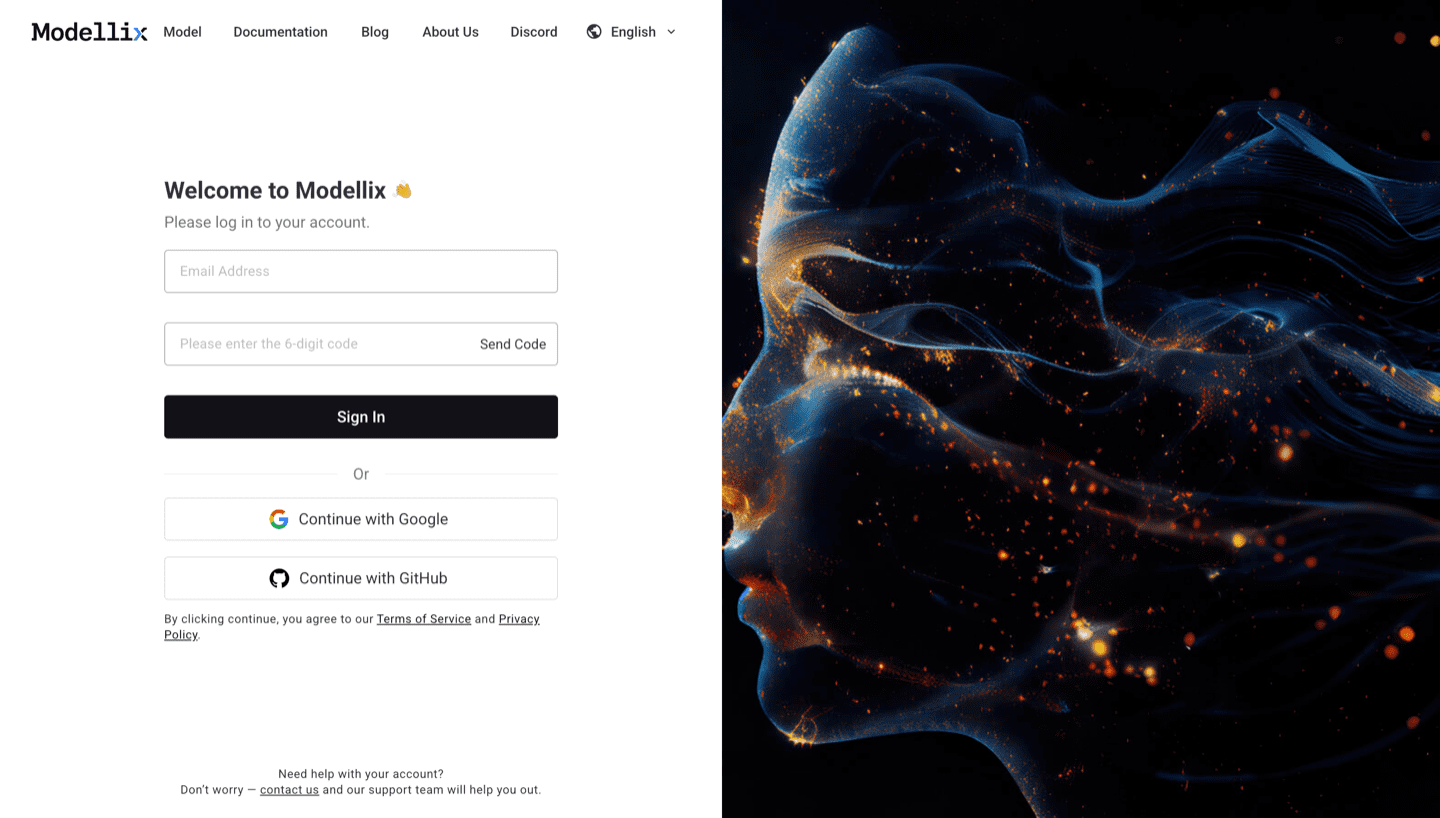
Step 1: Create or Sign In and Use the Included $1 Credit
Create or sign in to a Modellix account before you test Seedance 2.0 video models. New users can use the included $1 credit to validate model behavior, prompt quality, output download, and request logging without committing to a full integration.
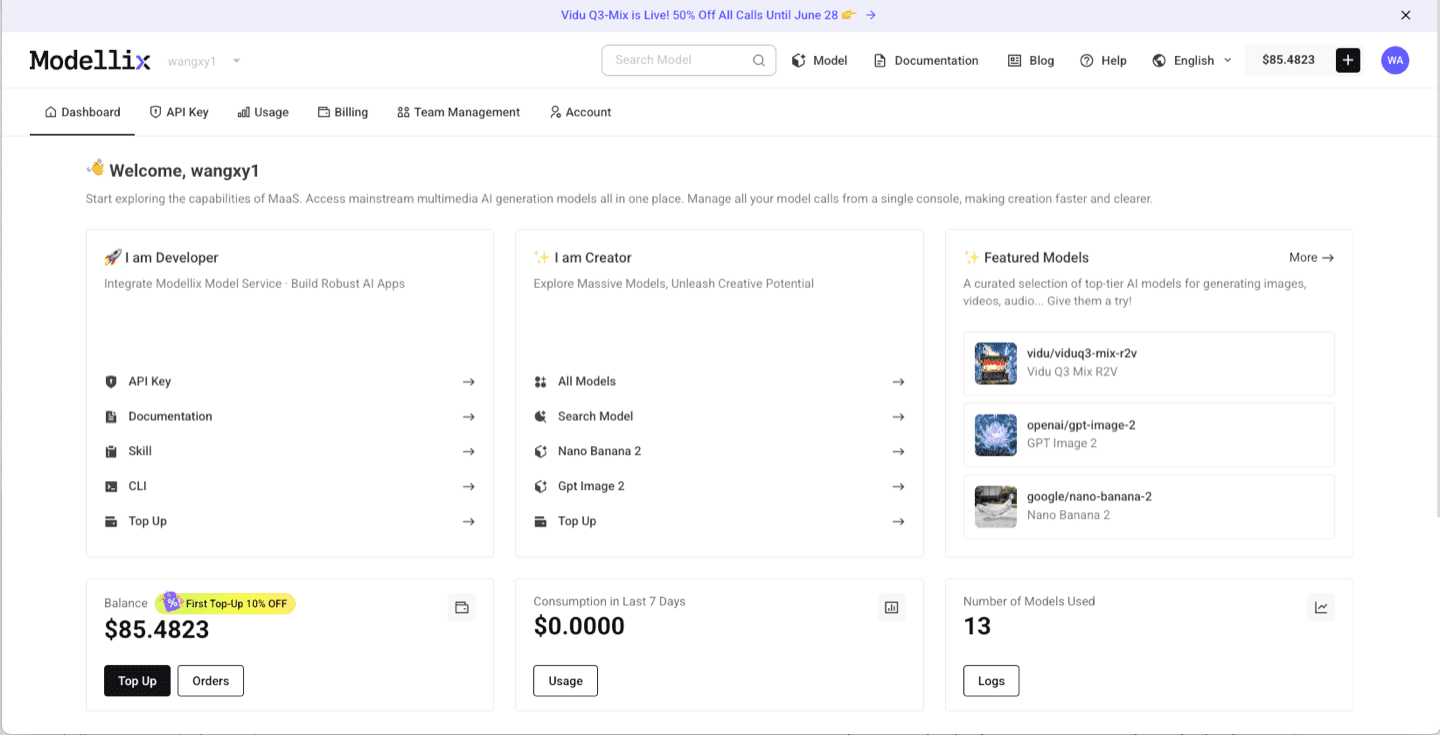
Step 2: Open the Model Page and Run One Prompt
After login, use the dashboard shortcuts or the Modellix model catalog to open Seedance 2.0 I2V model page. For video models, start with a short clip, then check aspect ratio, duration, resolution, motion quality, and whether the output is worth repeating. This step is the fastest way to learn whether the model fits before you read more code.
Step 3: Optimize the Prompt and Review the Output
Before you automate anything, improve the prompt and inspect one real output. The example below uses Vidu Q3 Mix R2V, but the same Playground pattern applies across Modellix model pages: write the prompt, use prompt enhancement when the brief is too thin, run the job, and review the generated media before creating an API workflow.

After the run finishes, check whether the result matches the prompt, motion, framing, and output format you need. A real preview is the conversion point: if the result works, move to API key, Skill, or CLI; if it does not, iterate in Playground before spending engineering time.

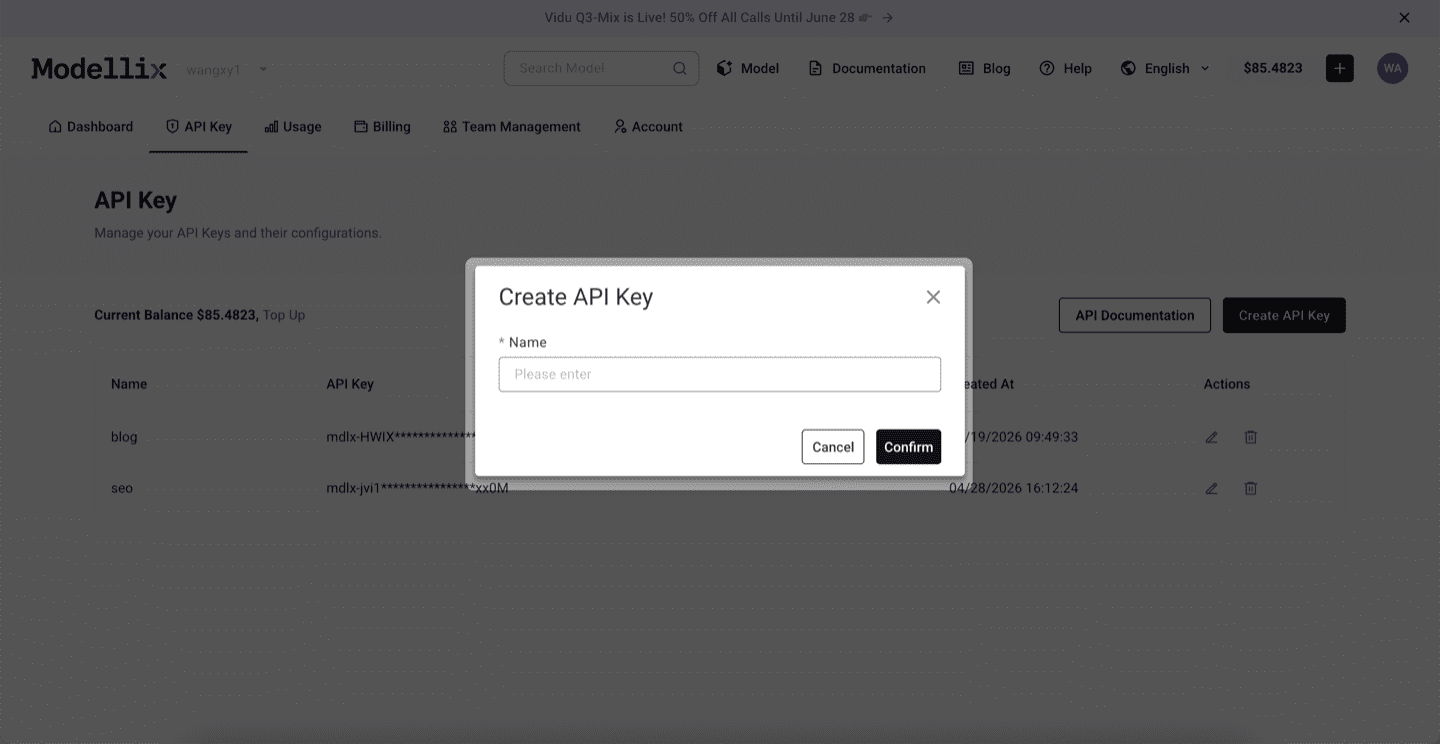
Step 4: Create an API Key Only When the Test Needs to Repeat
Stay in Playground for one-off exploration. Create an API key when a backend service, agent, batch script, or CLI workflow needs to repeat the same prompt pattern. This keeps the mainstream testing flow simple while giving developers a clean handoff point.
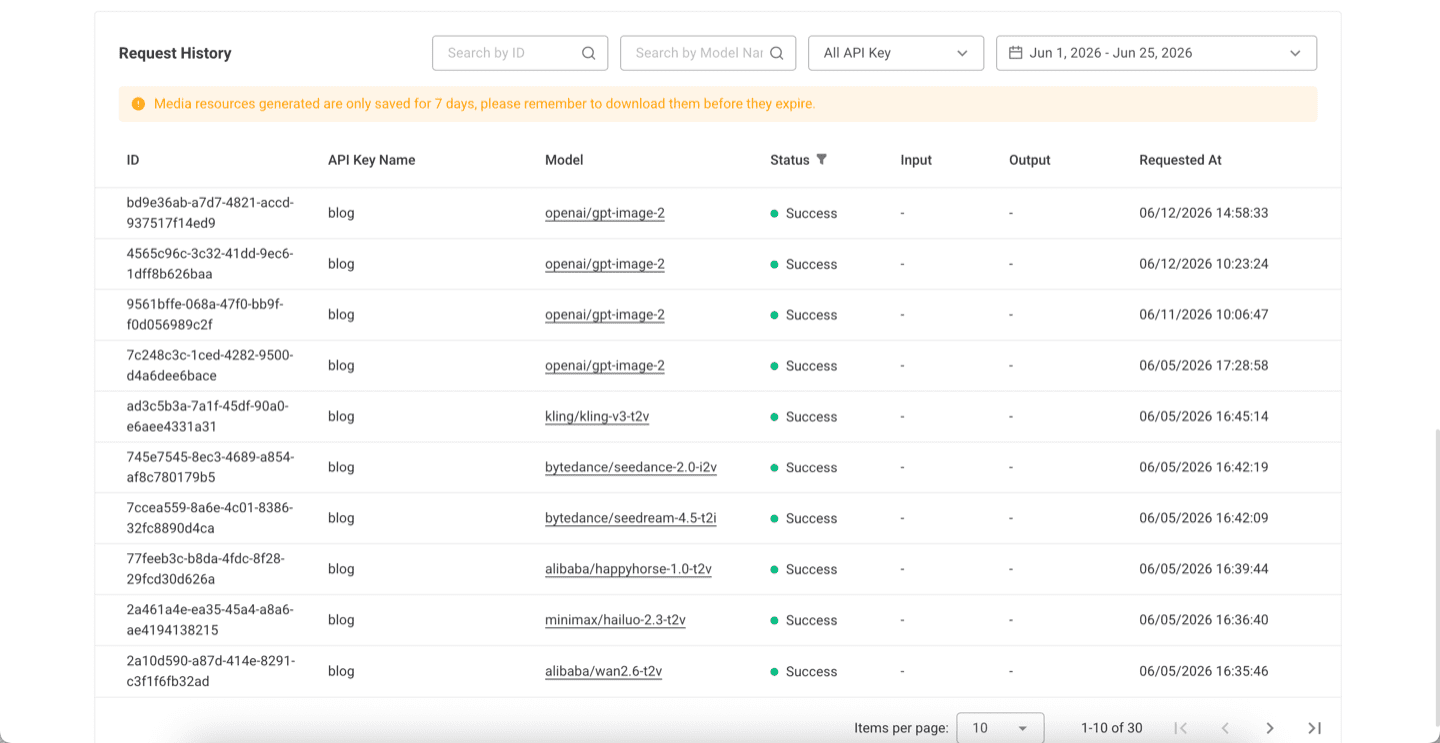
Step 5: Check Logs and Save the Result Before Scaling
Before scaling from one manual run to repeated API, Skill, or CLI usage, review request history. Logs confirm the model slug, API key name, task status, request time, and result retention window, which makes the workflow easier to debug after it leaves Playground.
Try Seedance 2.0 Next
The practical next step is to run one real job from the official site, not to copy a complex code sample too early. Start from the Modellix console, open the Seedance 2.0 I2V model page, and move to API, Skill, or CLI only after the output is good enough to repeat.
Validate Seedance 2.0 with a real reference job
Open the official Seedance 2.0 model page, test the reference-led workflow with the included credit, and use request logs before you automate UGC or product video jobs.
Frequently Asked Questions About Seedance 2.0 API (2026)
What is the difference between Seedance 2.0 I2V, Fast I2V, V2V, and Fast V2V?
The four variants split along two axes: input mode and speed tier. I2V (image-to-video) takes reference images as primary input; V2V (video-to-video) takes reference video clips. Within each mode, the Fast variant is optimized for lower latency at some quality tradeoff. Use standard variants for final production renders, Fast variants for development and high-concurrency pipelines.
What’s the difference between Seedance 2.0 on Volcano Engine vs. BytePlus?
Volcano Engine is ByteDance’s domestic China cloud. BytePlus is the international offering. Both carry Seedance 2.0 API access. If your infrastructure is outside China, BytePlus is the correct direct path. Modellix abstracts both , you use a single endpoint regardless of region.
Does Seedance 2.0 support image-to-video?
Yes. The I2V and Fast I2V variants accept 1-9 reference images alongside a text prompt and up to 3 audio tracks. Images can be assigned roles (e.g., first_frame) to control how the model uses them.
Can I extend a Seedance 2.0 video output with another API call?
Yes, using the V2V variant. Pass your previous output URL as the video reference in a new V2V call. The model reads the motion rhythm and visual style of the input clip and continues it. Chain multiple V2V calls to build sequences beyond the 15-second single-call limit , this is the mechanism behind 42-second single-take outputs.
What content is blocked by Seedance 2.0’s safety system?
ByteDance has built portrait and copyright safety standards into the platform covering all input modalities. Real-person likenesses require face verification and portrait authorization flows before they can be used as reference inputs. Plan your content pipeline around this if you’re building any product involving identifiable individuals.
How do I access Seedance 2.0 on Modellix?
Get an API key at modellix.ai/console/api-key. All four Seedance 2.0 variants are available immediately under the bytedance/ namespace. The endpoint pattern is https://api.modellix.ai/api/v1/bytedance/seedance-2.0-{variant}/async. No separate BytePlus or Volcano Engine account required.
How does Modellix pricing compare to going direct to BytePlus?
Modellix pricing is transparent and listed per model variant at docs.modellix.ai/get-started/pricing. The platform value beyond price is operational simplicity: one API key, one billing dashboard, and the same async job pattern whether you’re calling Seedance 2.0, Kling, Seedream, or Hailuo.
Access all four Seedance 2.0 variants (I2V, Fast I2V, V2V, Fast V2V) alongside Kling, Seedream, Hailuo, Wan, and every other major AI media model through a single API key at modellix.ai.