
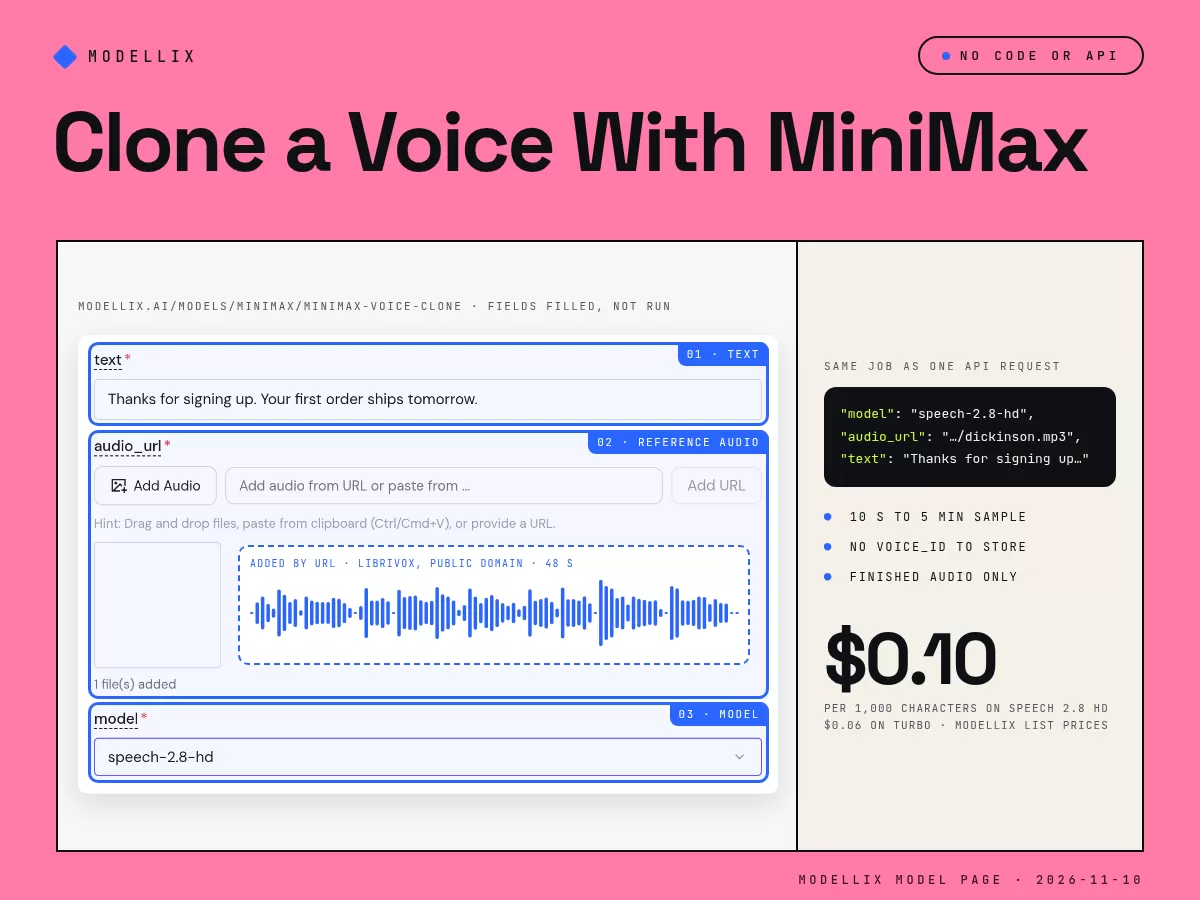
MiniMax voice clone copies a voice from a recording between 10 seconds and 5 minutes long, then reads any text you give it in that voice. You can do it in the MiniMax Audio web app without writing code, or through the API, where a cloned voice costs $1.50, charged the first time it speaks, plus $0.06 to $0.10 per 1,000 characters of speech. A 1,000-character script read in a new cloned voice on Speech 2.8 HD comes to $1.60 the first time.
This guide covers both: the web app steps, the three API calls, a one-request alternative that skips the voice library, what each setting does, what is free, and when cloning a voice is legal. The choice to make first is whether you need to keep the voice, or only need it for one piece of audio.
MiniMax Voice Clone at a Glance: Sample Rules, Price, and 3 Ways to Clone
| Requirement | MiniMax rule |
|---|---|
| Sample format | mp3, m4a, or wav |
| Sample length | 10 seconds to 5 minutes |
| Sample size | 20 MB at most |
| Optional example clip | Under 8 seconds, with its exact transcript |
| Text per request | Under 10,000 characters |
| Speech models | Speech 2.8 HD and Speech 2.8 Turbo |
| Voice lifetime (official API) | Deleted if not used for speech within 7 days |
Source: MiniMax voice clone guide and API reference.
| Route | Requests | Keeps the voice | What you pay | Best for |
|---|---|---|---|---|
| MiniMax Audio web app | None, all in the browser | Yes in a voice slot | Free daily credits or a plan from $5 a month | A voiceover for a video or podcast today |
| Official API, voice_id | 3: upload, clone, speak | Yes 7 days after last use | $1.50 per voice + $0.06 to $0.10 per 1,000 characters | An app that reuses the same voice |
| Modellix one request | 1, plus polling | No | $0.06 to $0.10 per 1,000 characters (list) | One-off narration, demos, per-user prompts |

The route decides the bill more than the model does. For one 1,000-character voiceover on Speech 2.8 HD, the official API charges $1.50 for the voice plus $0.10 for the characters, $1.60 in total, while a one-request clone lists at $0.10. At 500,000 characters a month on one voice, the $1.50 is a rounding error: $51.50 against $50 for the first month on HD. Those official and Modellix figures are list prices. The Modellix model page does not list a separate clone fee; we have not confirmed the billed total with a paid task. For more MiniMax list prices, see MiniMax pricing.

How to Clone a Voice in the MiniMax Audio Web App (No Code)
MiniMax Audio at minimax.io/audio is the consumer app on the same speech models. Sign in, then use the voice clone tool to upload or record a sample that meets the 10 second to 5 minute, 20 MB rules in MiniMax's voice clone guide. Generate a short preview, save the voice into your account, and use it in the app's text-to-speech tool. On-screen labels can change, so treat the steps as the flow rather than a button-by-button script.
- Open the voice clone tool.
- Add your sample. Upload a file or record one. Use a clean recording in a quiet room; MiniMax warns that reverb, more than one speaker, and background noise lower the quality.
- Review optional cleanup settings if the app offers them. Noise removal can also remove detail from the voice.
- Enter preview text, generate a preview, and listen before you save the voice.
- Save the voice with a name and the labels the app asks for.
- Use the saved voice in text to speech, with up to 10,000 characters per request, the same cap as the API.
Is MiniMax Audio free?
Partly. MiniMax's subscription terms say free users may receive daily, time-limited credits with limited voice cloning, and that these free features can change. Paid plans in the same terms:
| Plan | Price | Credits |
|---|---|---|
| Starter | $5 a month | 100,000 a month |
| Standard | $30 a month | 1,000,000 a month |
| Top-up | $30 per 1,000,000 credits, $5 minimum | Valid for two months |
Monthly credits expire at the end of each calendar month, and credits used on a failed generation are refunded. The terms do not say how many credits one character or one clone uses.
Those figures apply to the Audio web app. The MiniMax Open Platform bills API usage separately. Its pricing overview lists Audio Packages, with points, voice slots, and RPM, plus pay-as-you-go character rates. Some plan names overlap, but the allowances are not the same: Standard is 1,000,000 credits a month on the web app and 300,000 audio points a month on the API package.
| Open Platform Audio Package | Monthly price | Audio points per month | Voice slots | RPM |
|---|---|---|---|---|
| Starter | $5 | 100,000 | 10 | 10 |
| Standard | $30 | 300,000 | 100 | 50 |
| Pro | $99 | 1,100,000 | 250 | 200 |
| Scale | $249 | 3,300,000 | 500 | 500 |
| Business | $999 | 20,000,000 | 800 | 800 |
Source: MiniMax Open Platform pricing overview, Audio Packages table. Neither the Audio web app terms nor the Open Platform pricing page publishes a credits-per-character or points-per-clone figure.
Clone without code on Modellix
The MiniMax Voice Clone model page has the same form as the API: add a reference audio file or URL, type the text, pick HD or Turbo, and the finished speech plays in the browser. There is no voice to save, so it suits a single voiceover more than a recurring narrator.
How to Clone a Voice With the MiniMax API in 3 Steps
The official flow is upload, clone, then speak. Keep your key in the MINIMAX_API_KEY environment variable. If you still need a key, the MiniMax API key guide covers how to get one.
Step 1: Upload the sample
import os, requests

API = "https://api.minimax.io"
HEAD = {"Authorization": f"Bearer {os.environ['MINIMAX_API_KEY']}"}

with open("my_voice.mp3", "rb") as f:
    r = requests.post(f"{API}/v1/files/upload", headers=HEAD,
                      data={"purpose": "voice_clone"}, files={"file": f})
r.raise_for_status()
file_id = r.json()["file"]["file_id"]
The official base URL used above is https://api.minimax.io. Endpoint details and how they relate to TTS are in the MiniMax API URL guide.
Step 2: Create the clone
Pick your own voice_id: 8 to 256 characters, starting with a letter, using letters, digits, -, and _, not ending in - or _, and not used before. Adding text returns a short preview you can listen to before you commit.
r = requests.post(f"{API}/v1/voice_clone", headers=HEAD, json={
    "file_id": file_id,
    "voice_id": "narrator_anna_01",
    "text": "This is a short preview of the cloned voice.",
    "model": "speech-2.8-hd",
    "need_noise_reduction": False,
})
r.raise_for_status()
print(r.json()["base_resp"])  # status_code 0 means success
Step 3: Generate speech with the voice_id
r = requests.post(f"{API}/v1/t2a_v2", headers=HEAD, json={
    "model": "speech-2.8-hd",
    "text": "Welcome back. (breath) Today we cover three changes to the app.",
    "stream": False,
    "output_format": "hex",
    "voice_setting": {"voice_id": "narrator_anna_01", "speed": 1, "vol": 1, "pitch": 0},
    "audio_setting": {"sample_rate": 32000, "bitrate": 128000, "format": "mp3", "channel": 1},
})
r.raise_for_status()
open("narration.mp3", "wb").write(bytes.fromhex(r.json()["data"]["audio"]))
The $1.50 voice fee is charged on this first speech request, not at the clone step. Text must be under 10,000 characters per request; MiniMax suggests streaming for text over 3,000 characters, and the T2A Async API for longer jobs.
Fix common errors
| Code or symptom | What it means | Fix |
|---|---|---|
1043 |
The sample did not match text_validation closely enough |
Check the transcript word for word, or lower accuracy (default 0.7) |
2038 |
The account has no cloning permission | Finish account verification on the MiniMax platform |
2013 |
Invalid input | Check format, length (10 s to 5 min), size, and voice_id rules |
1002 |
Rate limit hit | Back off and retry; plans set RPM limits |
| Voice not found after a week | The clone was never used for speech within 7 days | Call T2A once right after cloning, or clone again |
Source: MiniMax API reference status codes.
Clone and Speak in One Request, Without a Voice Library
If you only need the voice for one piece of audio, the three calls above leave a voice behind that you never use again. The MiniMax Voice Clone endpoint on Modellix takes the reference audio URL and the text together, clones the voice for that request, and returns only the finished audio. No voice_id is created or returned.
When one request is the better choice
- Use one request for one-off narration, demos, and personalized lines where each user supplies their own sample.
- Use the official voice_id route when the same voice reads many scripts over weeks, or several apps need to share it.
- One request clones from the sample again every time. We have not measured how consistent the voice is across separate requests.
Run it on one API key
Each route below calls the same MiniMax Voice Clone endpoint with your Modellix key.
Playground
No code. Open MiniMax Voice Clone, add a reference audio file or URL, type the text, and the speech and the task cost show up in your browser.
Coding agent, no install
Paste one sentence into Claude Code, Codex, or Cursor and let it read the docs:
My Modellix API key is mdlx-••••••••••••••••••••••••. Read https://docs.modellix.ai/get-started/index.md and https://docs.modellix.ai/minimax/minimax-voice-clone.md , then clone the voice in https://example.com/my-voice.wav with minimax/minimax-voice-clone on speech-2.8-turbo, read the text in ./script.txt, save the MP3 to ./audio, and tell me what the task cost.
Swap in your own key from the console, and only share it with agents you trust.
Agent Skill
Install the skill once and your agent reads each model's schema and fills in the request fields itself. Setup is in the Skill guide.
npx skills add https://github.com/Modellix/modellix-plugin --skill modellix-design
Plugin
If your host has a plugin marketplace (Claude Code, Codex, Cursor), the plugin adds the Modellix skills and the Media Generation MCP. In Claude Code, run /plugin marketplace add Modellix/modellix-plugin, then /plugin install modellix@modellix. Other hosts are in the Plugin guide.
CLI
For scripts and batch jobs, such as one narration per row of a spreadsheet. See the CLI guide.
npm install --global modellix-cli
modellix-cli model run --model-slug minimax/minimax-voice-clone --body-file request.json --wait
REST API
Submit the reference URL and the text, keep the task_id, and poll until the status is success:
curl -X POST https://api.modellix.ai/api/v1/minimax/minimax-voice-clone \
  -H "Authorization: Bearer $MODELLIX_API_KEY" \
  -H "Content-Type: application/json" \
  -d '{
    "model": "speech-2.8-turbo",
    "audio_url": "https://example.com/my-voice.wav",
    "text": "Thanks for signing up. Your first order ships tomorrow.",
    "language_boost": "English"
  }'

curl "https://api.modellix.ai/api/v1/tasks/<task_id>" \
  -H "Authorization: Bearer $MODELLIX_API_KEY"
The reference URL must be public, and the same 10 second to 5 minute, 20 MB rules apply. Full fields are in the API guide. For a lower price per character, CosyVoice Clone lists $0.013 to $0.026 per 1,000 characters ($13 to $26 per 1M) for the same one-request pattern, on a different model.

What one request changes
- No voice library to manage. Send the reference audio URL with the text; the clone exists only for that request, so there is no voice_id to store, renew, or delete.
- Published character rates only. The model page lists $0.10 per 1,000 characters on HD and $0.06 on Turbo ($100 and $60 per 1M), the same character rates as MiniMax pay-as-you-go. Modellix docs and the model page do not list a separate voice-creation fee or a minimum charge. We have not billed a clone on Modellix, so this page does not treat a zero extra fee as a measured fact.
- Same key as your other audio and video models. The task goes through the same submit and poll flow as every other model on Modellix, so a narration step can sit next to transcription or video in one script.
MiniMax Voice Clone Settings: What Each One Changes
We did not run listening tests for this guide, so this section reports what MiniMax and Modellix document for each setting rather than how the output sounds.

| Setting | Where | What the docs say it does |
|---|---|---|
prompt_audio + prompt_text |
Both APIs | A clip under 8 seconds with its exact transcript, to improve similarity and stability |
need_noise_reduction |
Both APIs, web app | Removes background noise from the sample; the web app warns it can also remove voice detail |
language_boost |
Both APIs | Sets the expected language or dialect: 40 options, or auto |
model |
Both APIs | speech-2.8-hd for quality, speech-2.8-turbo for lower latency and cost |
emotion |
Speech request | One of seven: happy, sad, angry, fearful, disgusted, surprised, calm; unset lets the model infer it |
| Interjection tags | Text | 22 tags such as (laughs), (breath), (sighs), on Speech 2.8 HD and Turbo |
aigc_watermark |
Both APIs | Appends an AIGC watermark tone to the audio |
Record a sample that clones well
Use one speaker in a quiet room with no music, keep the microphone at the same distance, and speak at your normal pace. MiniMax accepts 10 seconds; the web app's recorder asks for 10 to 60 seconds. The app can remove background noise, but notes that the cleanup can cost voice detail, so a clean recording beats a cleaned one. If you add prompt_text or turn on text_validation, the transcript has to match the audio word for word. A speech-to-text model can draft it; our OpenAI Whisper API pricing test compares what five transcription APIs billed and how accurately they transcribed the same audio.
These are reference samples, the input a clone starts from, not cloned output. Press the sound button to hear each one; Copy Prompt copies a request body you can point at your own sample. Audio: LibriVox, public domain.
36 second reference sample
Solo reading of “Because I could not stop for Death” with the LibriVox disclaimer trimmed. One voice, no other speakers.
10 second minimum cut
The first lines of the same reading, cut to 10.5 seconds, just over the shortest sample MiniMax accepts.
HD or Turbo
Speech 2.8 HD costs $0.10 per 1,000 characters ($100 per 1M) and Speech 2.8 Turbo $0.06 ($60 per 1M). The Modellix docs describe HD as the higher-quality choice and Turbo as the lower-latency, lower-cost one. Both accept the same interjection tags and settings. If the voice will be heard by customers, render a test line on both and listen before you pick.
Consent and the law: is AI voice cloning illegal?
Cloning a voice is not illegal by itself, but using someone's voice without permission can be. Three rules show the direction:
- United States, calls. The FCC ruled on February 8, 2024 that AI-generated voices, including voice clones, count as "artificial" voices under the Telephone Consumer Protection Act, so robocalls that use them need the called person's prior consent (FCC-24-17).
- Tennessee. The ELVIS Act, in force since July 1, 2024, protects a person's voice, real or simulated, against unauthorized commercial use.
- European Union. From August 2, 2026, Article 50 of the AI Act requires anyone publishing deepfake audio that resembles a real person to disclose that it is AI-generated (European Commission FAQ).
MiniMax's terms make you guarantee that you own what you upload or have legal authorization, and that you have the data subject's consent when the content includes personal information (Open Platform terms of service). The Audio web app terms prohibit impersonation and require that your uploads not violate publicity or privacy rights (Audio terms of service). Subscription pricing for the web app is in the paid service terms. Neither the web app steps nor the API ask whose voice it is. Clone your own voice, or get written consent from the speaker that names the uses, and turn on aigc_watermark when listeners could mistake the audio for a real recording. This is general information, not legal advice.
MiniMax Voice Clone FAQ (2026)
How do I clone a voice with MiniMax?
In the MiniMax Audio web app, open Voice Clone, upload or record a 10 second to 5 minute sample, generate a preview, and save the voice. Through the API, upload the sample with purpose=voice_clone, call /v1/voice_clone with your own voice_id, then use that ID in text-to-speech requests.
Is AI voice cloning illegal?
Not in itself. Cloning your own voice, or a voice you have permission to use, is legal in most places. Using someone else's voice without consent can break publicity, fraud, or robocall laws, such as the TCPA in the US and the ELVIS Act in Tennessee, and the EU requires deepfake audio to be labeled from August 2026.
Is MiniMax AI audio free?
The web app gives free users daily, time-limited credits and limited voice cloning, according to MiniMax's subscription terms. Paid plans start at $5 a month for 100,000 credits. The API is pay as you go: $1.50 per cloned voice plus $0.06 to $0.10 per 1,000 characters.
How long does the voice sample need to be?
At least 10 seconds and at most 5 minutes, in mp3, m4a, or wav, under 20 MB. An optional second clip under 8 seconds, with its transcript, can be added to help similarity.
How much does MiniMax voice cloning cost?
On the MiniMax API, $1.50 per cloned voice, charged the first time it is used for speech, plus $0.10 per 1,000 characters on Speech 2.8 HD or $0.06 on Turbo. One 1,000-character clip in a new voice costs $1.60 on HD. A one-request clone on Modellix lists only the character rate. The model page does not list a separate voice-creation fee; we have not billed a test to confirm the final charge.
How long does a cloned voice last?
On the official API, a cloned voice that is not used for speech within 7 days is deleted. Once used, it stays in your account. A one-request clone on Modellix lasts only for that request.
Can you clone a celebrity's voice?
Not without authorization, and this article does not include a celebrity clone demo. MiniMax's Open Platform terms require you to guarantee that Client Content is owned by you or legally authorized, and to obtain consent when the data includes personal information. The Audio web app terms prohibit impersonation and require that uploads not violate publicity or privacy rights. In the United States, a celebrity's voice can be protected by publicity rights, and in Tennessee the ELVIS Act covers a person's voice, real or simulated, against unauthorized commercial use. For calls, the FCC treats AI-generated voices as "artificial" under the TCPA (FCC-24-17). Get written authorization from the rights holder before you clone a public figure's voice, and get local legal advice for the place you will publish.
Can I use a cloned voice commercially?
Only if you have the rights to the voice. MiniMax's published paid service terms and Open Platform terms do not grant a commercial-use license by plan. You still have to own the voice or have legal authorization, and the Open Platform terms require you to indemnify MiniMax if that guarantee fails. The Audio terms prohibit impersonation and uploads that violate publicity or privacy rights. Keep the speaker's written consent on file.
Related articles
PixVerse Lip Sync API Guide: Talking Video & TTS
Integrate PixVerse lip sync API: video plus audio or TTS input, the audio_url vs speaker_id contract, credits pricing, working code, and error handling.
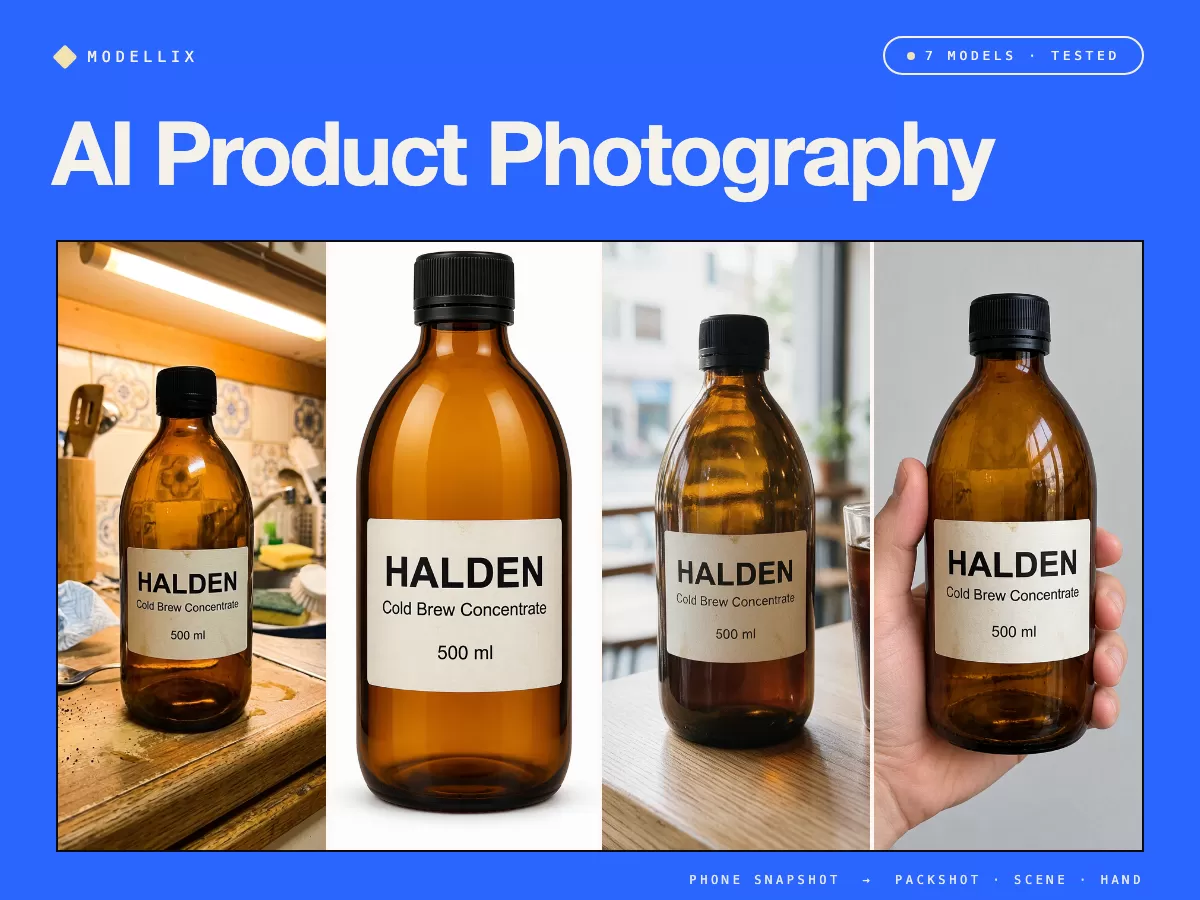
AI Product Photography: 7 Image Models Tested on One Product
We tested seven AI image models on the same product for packshots, lifestyle scenes, and hand shots. Compare color, labels, framing, speed, and actual cost.
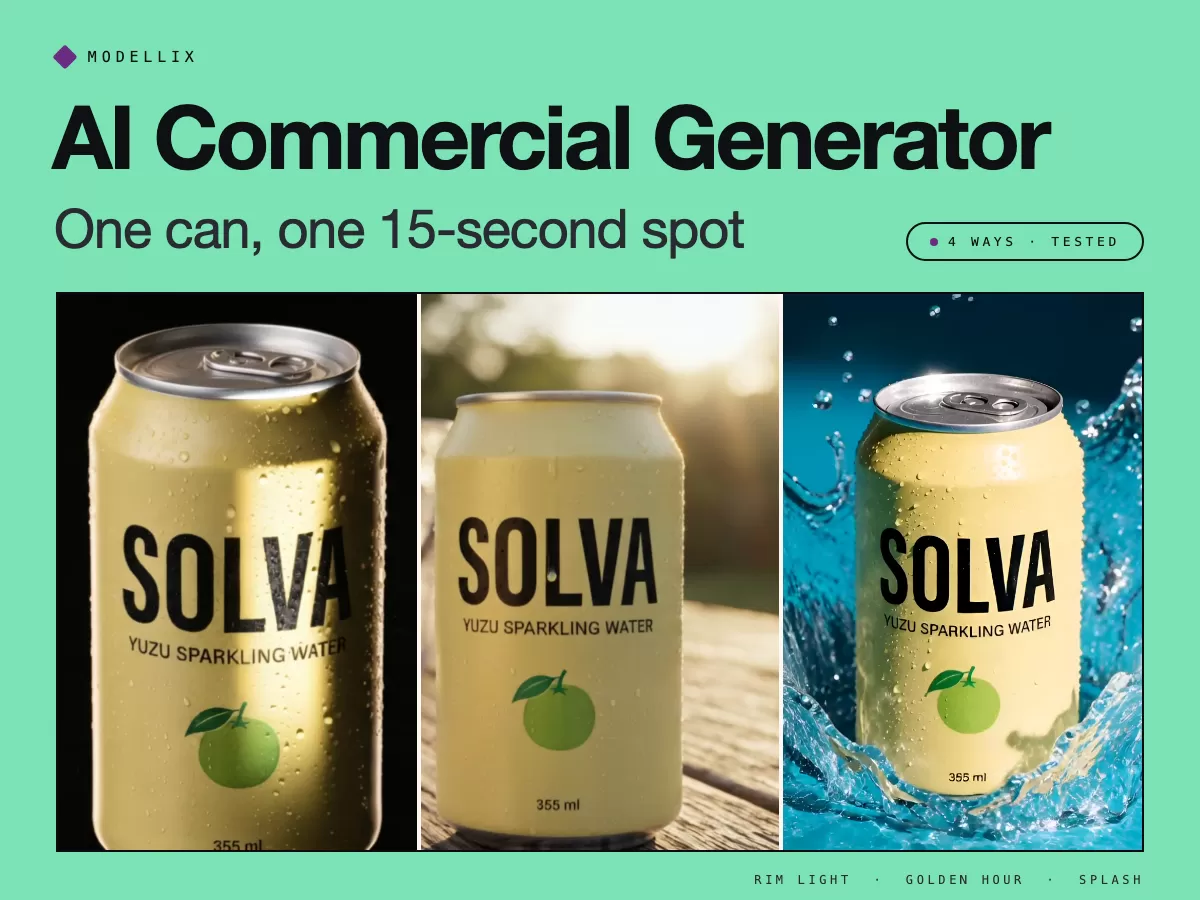
AI Commercial Generator [Tested]: 4 Ways to a 15s Ad
One product, one 15-second commercial, four AI routes. See every spot, what each cost, the lighting prompts that held, and what broke.
Storyboard AI [Tested]: Shot List to Animatic for Under $2
We ran storyboard AI end to end: one shot list through 3 image models and 5 video models. Free shot list template, prompts, results, and real costs.