
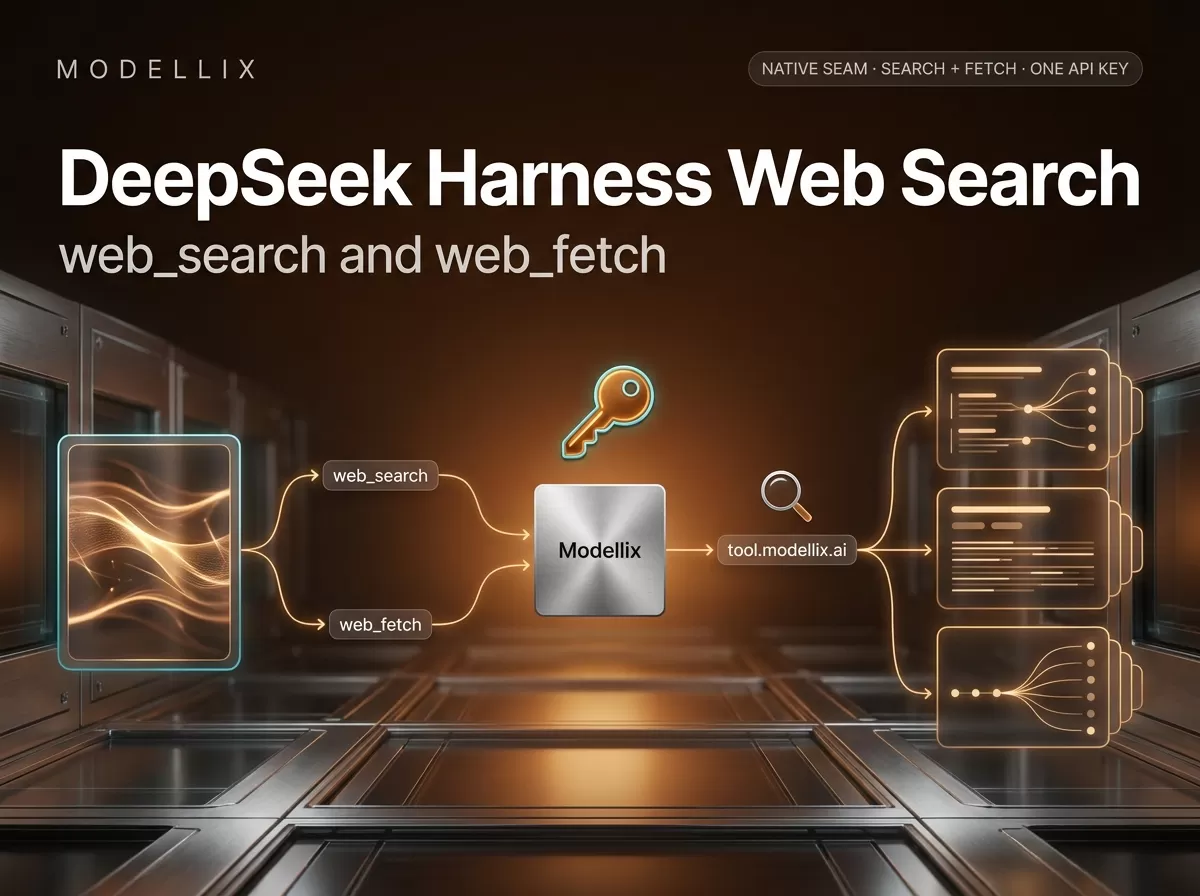
DeepSeek Harness Web Search: web_search and web_fetch
Swap DeepSeek Harness web_search and web_fetch providers: install dsh-modellix, add a Modellix key, and both native tools run through tool.modellix.ai.
Modellix
2026/08 — Explore published Modellix Blog articles by month and year.
Swap DeepSeek Harness web_search and web_fetch providers: install dsh-modellix, add a Modellix key, and both native tools run through tool.modellix.ai.
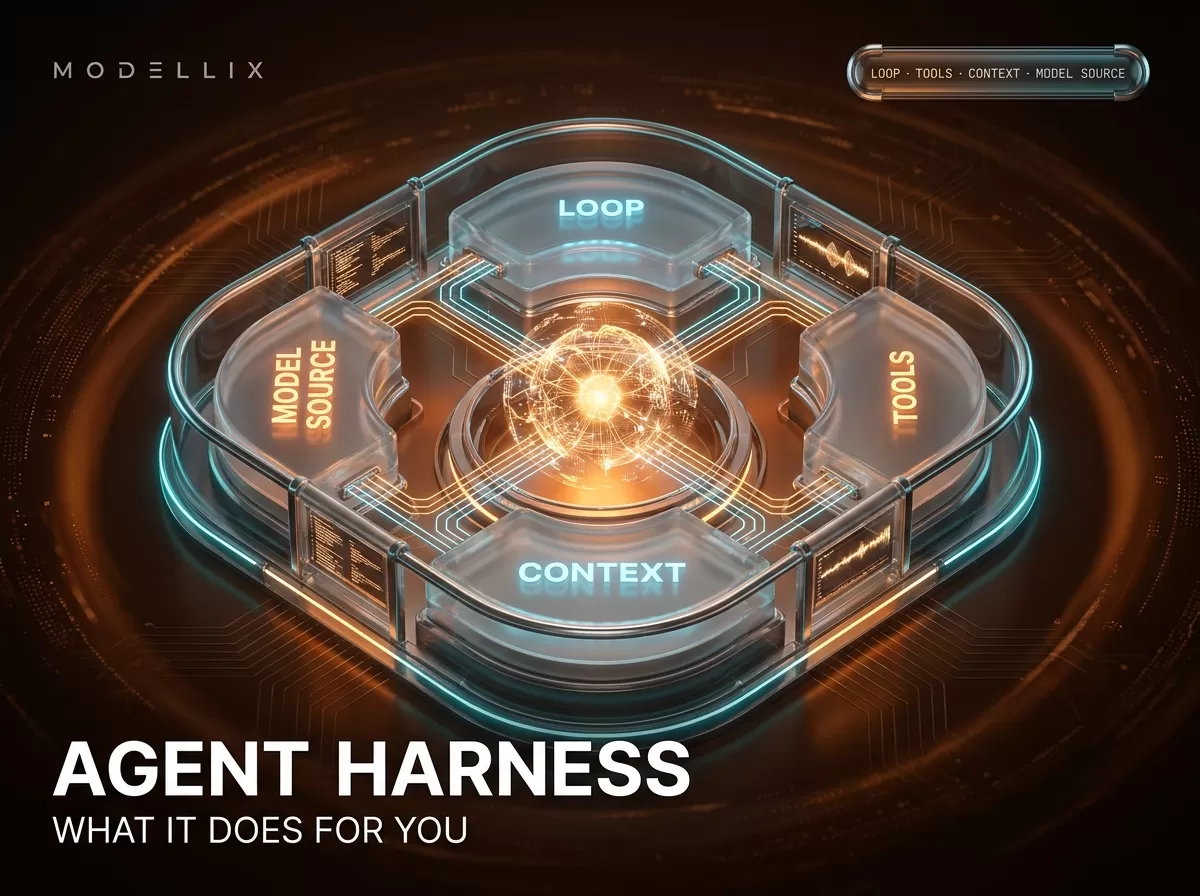
An agent harness turns a language model into an agent: loop, tools, context, and the model source most explainers skip. Examples and what it does for you.
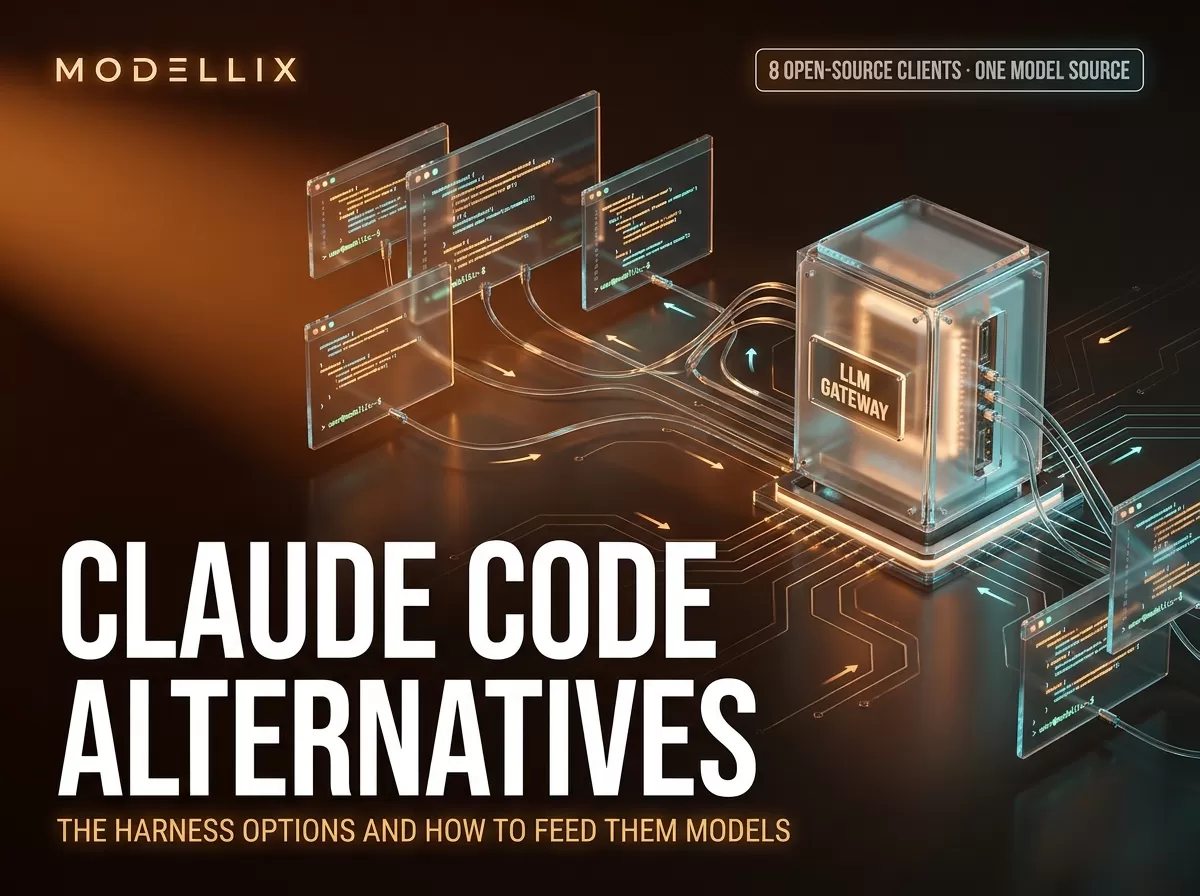
Claude Code alternatives in 2026: the open-source harness options, what happens to your Anthropic subscription, and how each client gets its model source.
Add any OpenAI-compatible provider to DeepSeek Harness: five-field Web UI form, settings.yaml block, 28 Modellix model IDs, and the traps behind UNKNOWN_MODEL.
DeepSeek Harness (dsh) is DeepSeek's open-source agent harness where everything is a plugin. Here's what it is, how to run it, and where its models come from.
MiniMax 2.5 API guide: legacy status, current per-million pricing, both base URLs, working curl and SDK code, error handling, and M2.5 vs M2.7 vs M3 guidance.
Seedance 2.0 vs Kling 3.0 is a workload decision: reference control and 4K headroom versus motion at scale. Live prices, API code, and tier guidance inside.
Grok Aurora vs Imagine: Aurora is xAI’s image model; Imagine is the image and video API built on it. Compare model IDs, live per-image pricing, and route fit.
Seedream 4.0 API pricing explained: official BytePlus rate is $0.03 per image, with resolution and batch rules, aggregator prices, and a cost estimator.
Hailuo vs Kling: pick Kling 3.0 for motion, multi-shot, audio and 4K, Hailuo 02/2.3 for people and stylized characters. What one clip costs, from $0.10.
Where to get a Nano Banana 2 API key: Google AI Studio or Modellix. Step-by-step setup, the auth headers that differ, dated per-image pricing, and working code.
OpenAI image generation API pricing explained: gpt-image-2 token rates, real per-image costs by quality, batch discounts, and direct vs aggregator routes.